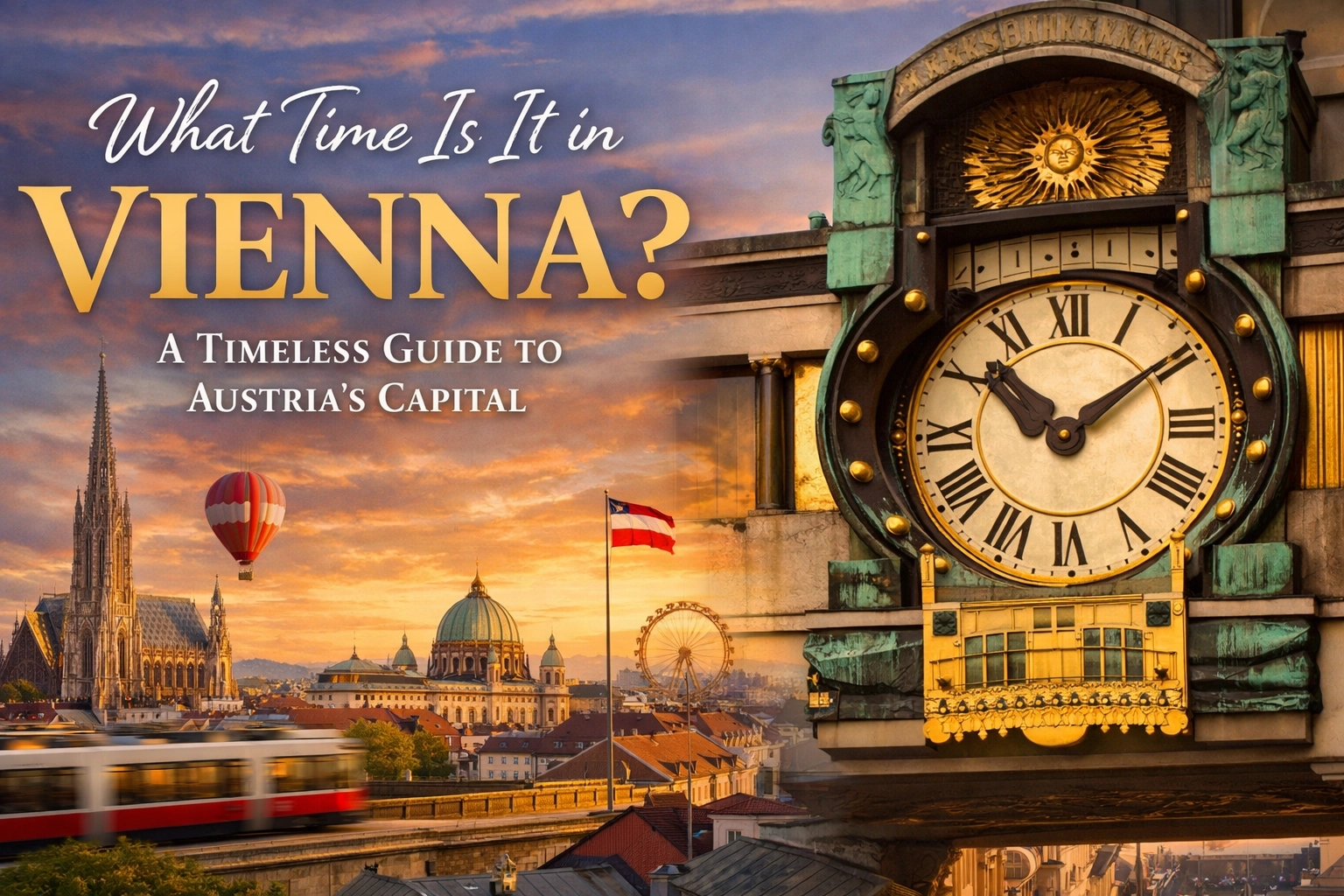

Vienna is a city that moves with a rhythmic, mechanical precision, hidden beneath a layer of imperial elegance and baroque flair. Whether you are stepping off a red-eye flight at Schwechat Airport or dialing into a high-stakes board meeting from a skyscraper in Manhattan, knowing the exact answer to "what time is it in Vienna" is the difference between seamless execution and a logistical nightmare.
Right now, as of Thursday, March 5, 2026, Vienna is operating on Central European Time (CET). You are currently looking at a UTC+1 offset. But don't get too comfortable with this schedule; the European spring is coming, and with it, the inevitable shift of the clocks.
In this guide, you will master the nuances of Austrian timekeeping. You’ll navigate the transition to Daylight Saving Time, optimize your global meeting schedule, and learn how to sync your internal clock with the city’s legendary coffee house culture. Efficiency. Precision. Period.
The Technical Breakdown: CET vs. CEST
To master your itinerary, you must understand the "why" behind the "when." Vienna, like most of the European Union, follows a strict seasonal time-shifting protocol.
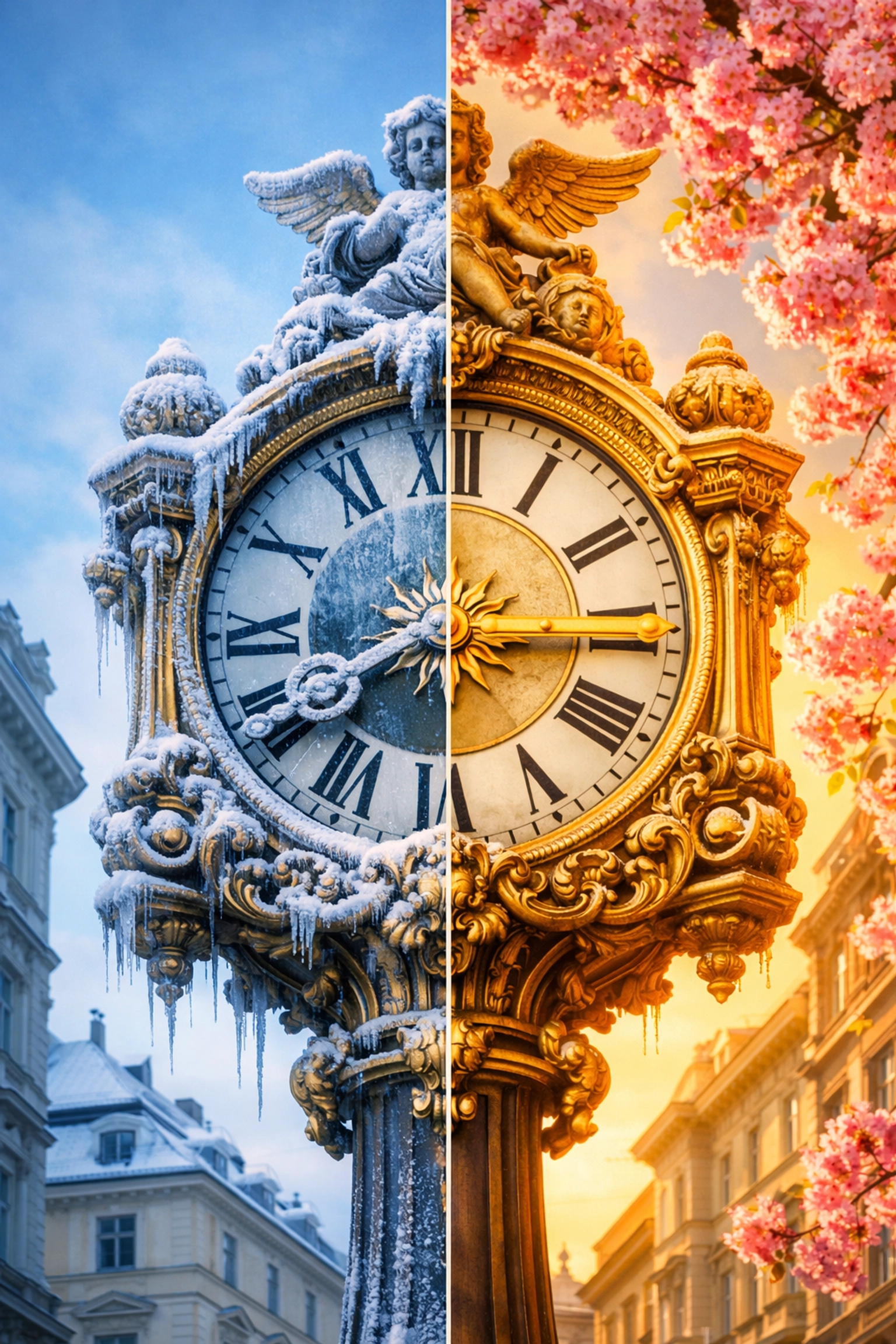
Currently, the city is tucked into its winter schedule. Central European Time (CET) puts Vienna exactly one hour ahead of Coordinated Universal Time (UTC). However, the clock is ticking toward the spring transition. On Sunday, March 29, 2026, at exactly 2:00 AM, the city will leap forward into Central European Summer Time (CEST). At that moment, the offset shifts to UTC+2.
Why the Shift Matters for You
If your business trip spans the end of March, you will lose an hour of sleep but gain an extra hour of golden-hour light over the Danube Canal. Failing to account for this shift will result in missed departures and botched teleconferences. You should verify if your digital calendar has automatically updated, especially if you are tracking the EU time zone reform updates, which have been a topic of heated debate for years.
Vienna vs. The World: Coordinating Your Global Calendar
For the high-level professional, Vienna does not exist in a vacuum. It is a cog in a global machine. To maintain your edge, you need to internalize these time gaps instantly.
- New York City (EST): Vienna is 6 hours ahead. When your colleagues in NYC are grabbing their first cup of burnt office coffee at 9:00 AM, you will be finishing a late-lunch meeting in the First District at 3:00 PM.
- London (GMT): Vienna is 1 hour ahead. This is the easiest bridge to gap. A 10:00 AM London call is an 11:00 AM Vienna appointment. Zero friction.
- Istanbul (TRT): Vienna is 2 hours behind. If you are coordinating logistics with the Middle East, remember that Istanbul is already hitting its stride while you are still clearing your morning inbox. Check the current time in Istanbul to ensure your cross-border communications remain synchronized.
- Tokyo (JST): Vienna is 8 hours behind. This is the danger zone. When you are ending your workday at 6:00 PM, Tokyo is already waking up at 2:00 AM the next day.
Pro-Tip: Trust the 24-hour clock. In Austria, like much of Europe, "3:00 PM" is 15:00. If your dinner reservation says 20:00, show up at 8:00 PM sharp. Punctuality in Vienna isn't a suggestion; it’s a social contract.
The Executive’s Daily Flow: Harnessing Daylight
As of March 5, the sun rises in Vienna at approximately 6:26 AM and sets at 5:46 PM. You will have roughly 11 hours and 20 minutes of daylight to play with. This is the "sweet spot" of the year: long enough to be productive, short enough to demand focus.

Morning: The Power Hour
Maximize the early sunrise. You will find that the city is quietest between 6:30 AM and 8:00 AM. This is your window for a run through the Prater or a focused deep-work session before the bustle of the Ringstraße begins.
Midday: The Melange Meeting
In Vienna, the "business lunch" is often replaced by the "coffee house meeting." Between 1:00 PM and 3:00 PM, the grand cafes: like Café Central or Café Sperl: become hubs of intellectual and commercial exchange. You will order a Wiener Melange, keep your voice at a respectful volume, and navigate the labyrinthine nuances of Austrian etiquette.
Evening: The Cultural Pivot
As the sun sets at 5:46 PM, the city shifts from commerce to culture. If you are attending the Vienna State Opera, remember that performances often begin early: sometimes as early as 6:00 PM or 7:00 PM. You'll need to wrap your workday by 5:00 PM to ensure you aren't the person stumbling into the stalls mid-overture.
Navigating Vienna International Airport (VIE)
Efficiency starts the moment you touch down. Vienna International Airport (VIE), located in Schwechat, is one of the most streamlined hubs in Europe.
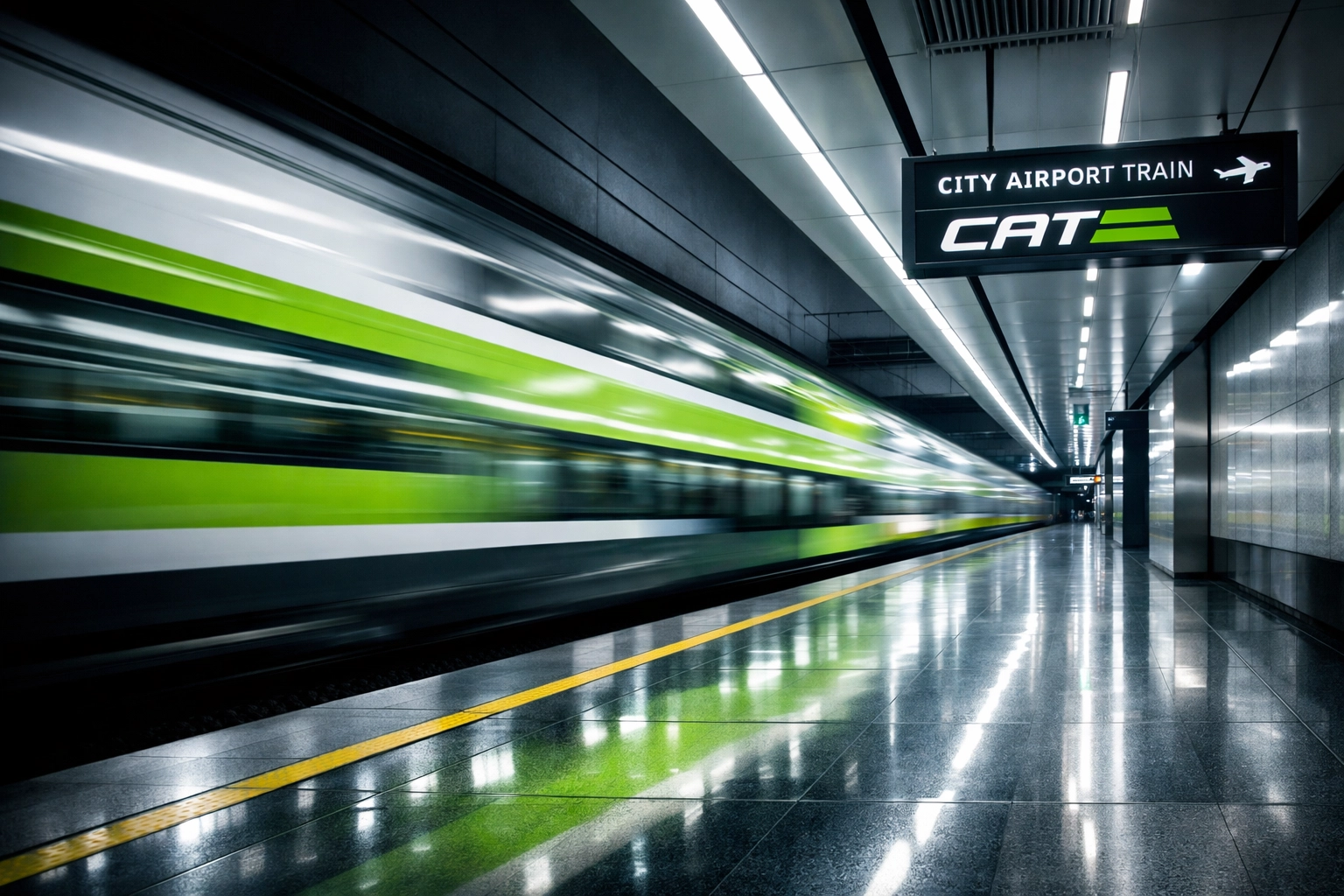
- The City Airport Train (CAT): This is your secret weapon. It departs every 30 minutes and whisks you to the city center (Wien Mitte) in exactly 16 minutes.
- Check-in Deadlines: If you are flying within the Schengen Area, arrive 90 minutes early. For international long-haul, 2.5 hours is your safety margin.
- Time Zone Transitions: If you’re arriving from North America, you will likely land in the early morning. Resist the urge to nap. Force yourself to stay awake until 9:00 PM CET to reset your circadian rhythm quickly.
For more tips on handling these transitions, consult our traveler’s guide to never missing a flight.
Pro-Tips for the High-Stakes Traveler
To truly master the time in Vienna, you must look beyond the clock face and understand the habits of the city.
- Sunday Silence: Almost everything: grocery stores, boutiques, pharmacies: is closed on Sundays. Do not wait until Sunday morning to buy essentials. You will fail.
- The "Akademische Viertel": While punctuality is key, there is an old tradition of the "academic quarter-hour" (the 15-minute grace period). However, in modern business, do not rely on this. Arrive five minutes early. Trust me.
- Digital Tools: Use a reliable world clock app, but also keep an eye on the major international cities index to see how Vienna compares to your other hubs in real-time.
Why Vienna’s Time Matters Now
We are living in an era of time zone changes and countries switching time zones. While Austria remains a pillar of stability in the Central European block, the ongoing debates about permanent summer time mean you must stay informed.
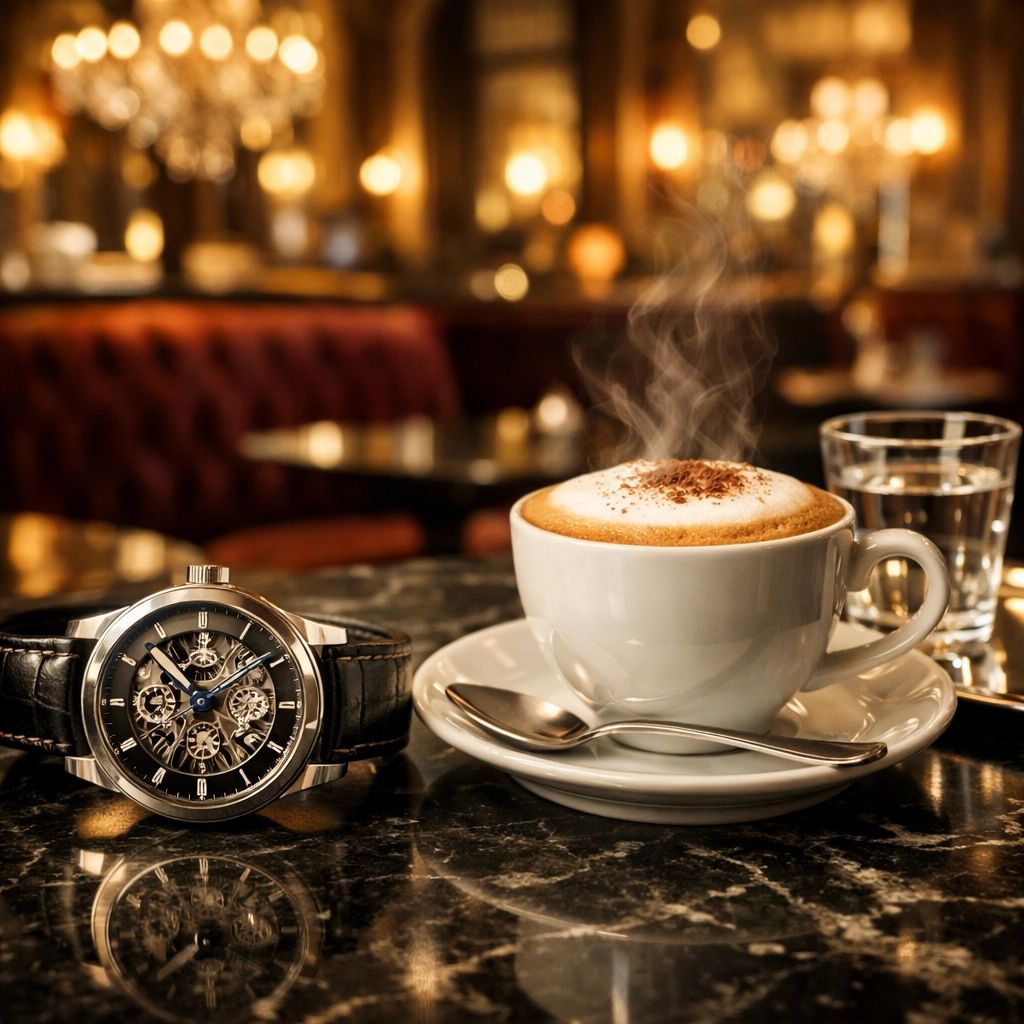
By knowing exactly what time it is in Vienna, you aren't just reading a number; you are reclaiming control over your productivity. You are ensuring that you are the most prepared person in the room. You will navigate the cobblestone streets with the confidence of a local and the precision of a Swiss watch: even if you're in the heart of Austria.
Whether you are here for the World Bank meetings, a tech conference at the Austria Center Vienna, or simply to soak in the history of the Hofburg, your relationship with time will define your success.
Stay sharp. Stay synchronized. Master the Vienna clock.
For a broader perspective on how the world manages these complex shifts, explore our sitemap of global time resources or check out our latest deep dive into the time zone that broke the internet.
Vienna is waiting. And now, you know exactly when to arrive.