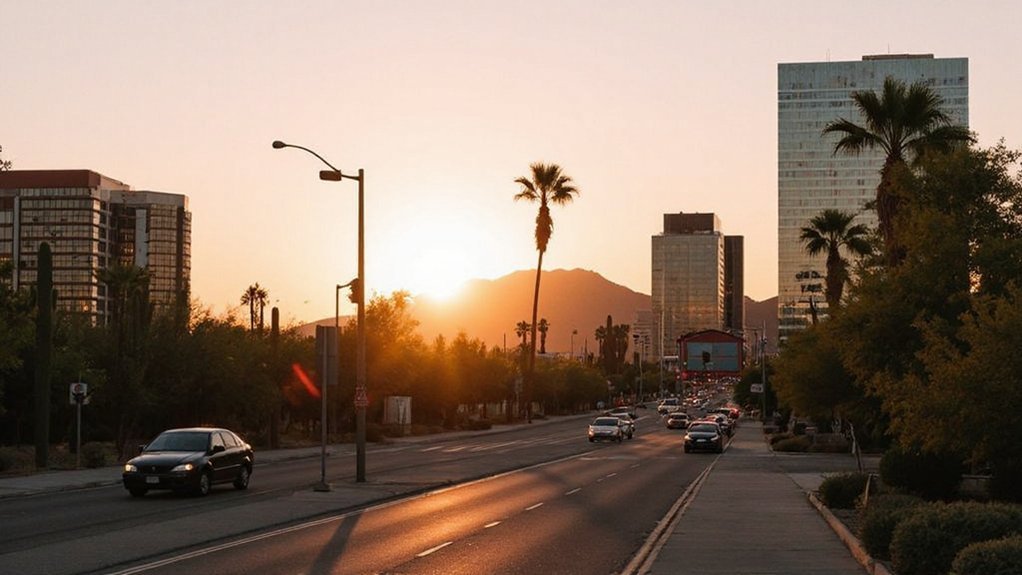

You should know Phoenix stays on Mountain Standard Time (UTC−7) year‑round and doesn’t observe daylight saving. That means its clock matches Pacific Daylight Time in summer and Mountain Standard Time in winter. This affects scheduling across time zones, especially for recurring meetings — here’s what to watch for so you don’t miss a call.
How Arizona’s Time Zone Works
Although Arizona lies in the Mountain Time Zone, it stays on Mountain Standard Time (MST, UTC−7) year‑round and doesn’t spring forward for daylight saving; you can therefore treat Arizona as fixed at UTC−7 except where local rules differ. You should note one exception: the Navajo Nation observes daylight saving, so clocks there shift to MDT (UTC−6) during summer; the Hopi Reservation and some border areas do not, so you’ll encounter pockets with differing offsets. For scheduling, use UTC−7 for Phoenix and most of Arizona, and confirm times for tribal lands and cross‑border appointments. Your devices usually update correctly if region is set to Phoenix or Arizona. When converting, add or subtract hours relative to UTC−7. Always verify time for travel and remote meetings too.
When Phoenix Matches Pacific Time
From mid-March to early November, Phoenix matches Pacific Time because Pacific clocks move forward for daylight saving while Arizona stays on Mountain Standard Time. You should know Arizona skips DST statewide (the Navajo Nation is the exception), so its clocks never change. That means you must adjust scheduling, travel plans, and broadcast or meeting times seasonally to avoid confusion.
When DST Applies
When Pacific Time springs forward on the second Sunday in March and stays on daylight time until the first Sunday in November, Phoenix—which stays on Mountain Standard Time year‑round—shares the same clock time as Pacific Daylight Time. During that interval, you can treat Phoenix as if it’s on Pacific time for scheduling, travel, and tech settings. From the March switch through the November reversion, noon in Los Angeles equals noon in Phoenix. Outside those dates, Phoenix reverts to being one hour ahead of Pacific Standard Time. When you coordinate across time zones, confirm whether counterparts are observing daylight or standard time; many calendars and devices adjust automatically, but mistakes still happen. Rely on explicit time-zone labels to avoid errors. Double-check during shifts and updates.
Why Arizona Skips DST
Because Arizona’s intense summer heat makes later evening daylight impractical, the state opted out of federal Daylight Saving Time in 1968 and keeps Mountain Standard Time year‑round. You’ll consequently see Phoenix align with Pacific Daylight Time during DST months, though Arizona’s clocks never change.
| Period | AZ | Pacific |
|---|---|---|
| Standard | MST | PST |
| DST months | MST | PDT |
| Reason | Heat | Energy |
| Since | 1968 | Follows DST |
When Phoenix matches Pacific Time during DST, your devices and services often display the same clock as California; verify timezone settings for meetings, travel, or digital services because automatic adjustments differ by platform and you’ll avoid errors by confirming timezone rather than relying on assumptions.
Effects on Scheduling
Arizona’s year‑round MST causes Phoenix to line up with Pacific Daylight Time in spring and summer, and that alignment changes how you schedule across time zones. When Pacific clocks jump forward, Phoenix effectively matches Pacific Daylight Time, so your meetings with California participants don’t shift; they occur at the same local hour you expect. Conversely, in autumn when Pacific returns to standard time, Phoenix becomes one hour ahead, so you must adjust. You should explicitly state times with both city names or use UTC offsets to avoid ambiguity. For recurring events spanning the time change, lock meetings to a fixed UTC or specify “Phoenix time” to maintain consistency. Test calendar apps and confirm attendees’ zones to prevent missed calls and scheduling errors and reduce confusion.
When Phoenix Matches Mountain Time
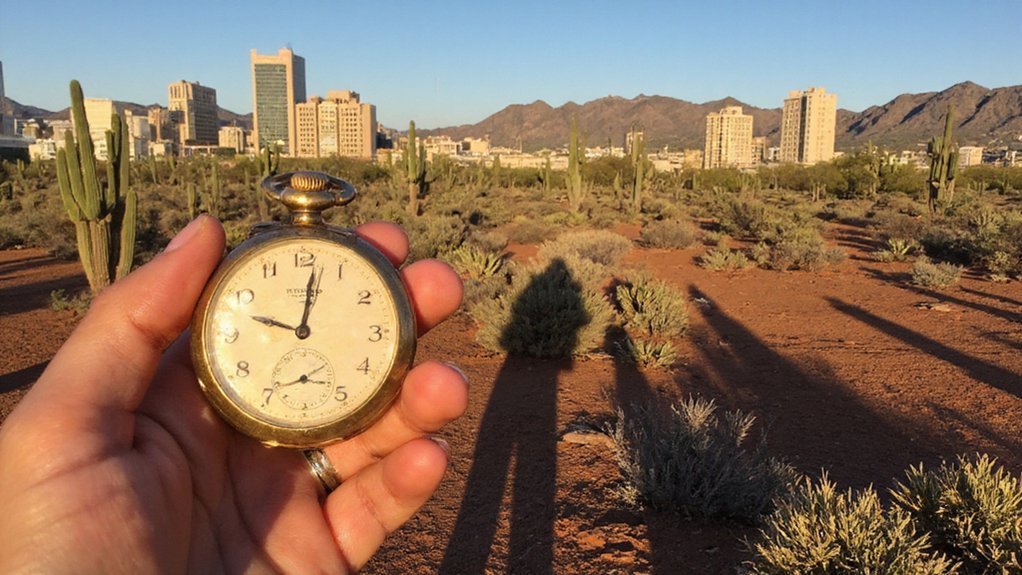
Though Arizona doesn’t observe daylight saving, Phoenix matches Mountain Time from early November through mid-March, when the rest of the Mountain Time Zone is on Mountain Standard Time (UTC−7). You can rely on Phoenix sharing the same clock as Denver and other MST locations during that interval, so schedule calls, travel, and deadlines accordingly. When coordinating across time zones, confirm whether counterparts observe daylight saving; if they do, their clocks shift in spring and fall, but Phoenix remains fixed. Use UTC−7 as Phoenix’s reference year-round except when comparing to Pacific or Mountain Daylight Time. For clear communication, state both the local time and the UTC offset in invitations and itineraries; that removes ambiguity and prevents missed meetings. You’ll avoid costly timing mistakes this way.
Daylight Saving Time Exception: the Navajo Nation
One exception you’ll need to note is the Navajo Nation, which does observe daylight saving time while most of Arizona does not, so during DST its clocks move to Mountain Daylight Time (UTC−6) and no longer match Phoenix’s UTC−7. When you travel through or communicate with locations inside the Navajo Nation, confirm whether local time follows DST; jurisdiction spans parts of Arizona, New Mexico and Utah, and tribal law governs observance. You should expect a one-hour difference from Phoenix during DST, which begins second Sunday in March and ends first Sunday in November. Rely on official tribal or government time notices rather than assumptions, and check local sources when precise timing matters. Don’t assume contiguous Arizona shares the same clock during daylight-saving months anymore.
Tips for Scheduling Calls and Meetings With Phoenix
Remember, Phoenix observes Mountain Standard Time year‑round. It doesn’t observe daylight saving time, so its clock aligns with Pacific Daylight Time in summer and Mountain Standard Time in winter. If you’re scheduling near the Navajo Nation, confirm local observance because some areas do follow DST.
Remember Phoenix’s MST
How do you avoid scheduling errors with Phoenix? You lock to Mountain Standard Time (MST) year-round when planning. Treat Phoenix as MST on your calendar, confirm the zone when you create events, and state MST in invites so recipients compare correctly.
- Set event zone to America/Phoenix
- Label invites “MST” and include location
- Verify participant time zones before finalizing
- Use reliable time-conversion tools for cross-checks
- Reconfirm meetings 24 hours before the call
Follow these steps consistently. You’ll reduce missed calls and confusion, and you’ll manage cross‑regional scheduling with predictable, authoritative accuracy. When in doubt, propose two MST time options and let participants pick; include clear AM/PM designations and consider participants’ work hours to maximize attendance. Be explicit — ambiguity causes missed meetings. Every single time. Period.
No DST in Phoenix
Since you lock calendars to MST, note that Arizona (except the Navajo Nation) doesn’t observe Daylight Saving Time — Phoenix stays at UTC−7 while many Mountain Time zones move to UTC−6. When you schedule, treat Phoenix as fixed offset year‑round. Confirm local times against UTC when coordinating across regions that do shift. Specify time zones in invites (use “Phoenix (MST, UTC−7)”) to avoid platform ambiguities. For recurring meetings, pick times that remain viable through DST shifts elsewhere; midday often minimizes disruption. If you automate scheduling, set rules that convert external DST changes to Phoenix’s constant offset. Communicate the offset explicitly in initial outreach. That reduces missed meetings, prevents double bookings, and keeps your cross‑region scheduling reliable. Train staff to follow this consistently and audit regularly.
Confirm Navajo Nation Exceptions
Did you know the Navajo Nation observes DST while most of Arizona does not? When scheduling with Phoenix, confirm whether contacts are within the Navajo Nation to avoid a one-hour mismatch during DST months. Ask directly and state meeting time zone explicitly.
- Ask whether the attendee is in the Navajo Nation.
- Specify times with “Mountain Standard Time” or “Mountain Daylight Time.”
- Use city plus time zone: “Window Rock (Navajo) MST/MDT.”
- Set calendar invites with explicit UTC offsets.
- Reconfirm 24–48 hours before the call.
These steps prevent missed meetings and demonstrate professional attention to time-zone nuances. Also consider time-conversion tools, labeled meeting titles, and a brief timezone note in the invite body so participants can confirm local time instantly, for reliable scheduling every single time.
Tools and Apps to Check Phoenix Time Now
When you need Phoenix time right now, use tools that give an immediate, reliable readout: your phone or smartwatch world-clock, desktop system tray or menu-bar clock set to Mountain Standard Time (no DST), reputable websites like timeanddate.com or worldtimebuddy, voice assistants (Alexa, Google Assistant, Siri), or a quick terminal/command prompt query to an NTP server. Check device time zone settings to confirm they’re set to MST (America/Phoenix) so automatic DST adjustments don’t change the display. Prefer authoritative sources for scheduling across regions. Bookmark a trusted site, add Phoenix to your devices’ world clocks, and test voice assistant responses. If you’re scripting or automating, query an NTP server or use tz database identifiers to guarantee consistent, programmatic results, and verify with local contacts when critical.
Conclusion
You’ll find Phoenix stays on Mountain Standard Time (UTC−7), year‑round, so don’t expect spring/summer clock changes. Between mid‑March and early November its clock matches Pacific Daylight Time; the rest of the year it lines up with Mountain Standard Time elsewhere. Note the Navajo Nation’s different rule inside northeastern Arizona. For reliable scheduling, set your device to America/Phoenix or use a world‑clock app showing UTC−7. That keeps calls and meetings on time and avoids timing confusion.