You probably don’t know Arizona dodges the clock change—except the Navajo Nation, which does. Hawaii shrugs too. So do Puerto Rico and a handful of island territories. Meanwhile you keep pretending your microwave is a time scientist. Why are they out while you’re stuck springing and falling like a yo‑yo? Energy myths, sun math, politics, school buses—pick your poison. Want the map, the mess, and the fallout?
Key Takeaways
- Arizona does not observe DST; it stays on Mountain Standard Time year‑round.
- Within Arizona, the Navajo Nation observes DST; the Hopi Reservation does not.
- Hawaii does not observe DST; it stays on standard time year‑round.
- U.S. territories skip DST: Puerto Rico, U.S. Virgin Islands, Guam, Northern Mariana Islands, and American Samoa.
- Federal law permits permanent standard time only; other U.S. states still switch clocks twice yearly.
What Daylight Saving Time Is and Why It Exists
Ever wonder why you wake up one day and the clock just lies to your face? That’s Daylight Saving Time grabbing your schedule by the collar and shaking it. You spring forward. You fall back. Cute rhyme, brutal mornings. It’s a Seasonal Adjustment pretending to gift you evening light while stealing sleep like a pickpocket. You play along because Timekeeping Conventions demand order, or at least the illusion of it. Farmers? Not the reason. Energy savings? Debated, loudly. Commuters cheer late sun. Nurses curse night shifts. Kids miss buses. You adjust anyway, coffee in hand, eyes on fire. Blame war planners, factory whistles, and our obsession with squeezing productivity from dusk. You didn’t ask for this clock trick. You still pay. Every. Single. Year.
Where DST Is Not Observed in the United States
You think everyone flips clocks—wrong: Arizona says no, except the Navajo Nation, which keeps DST across its sprawling lands. Hawaii laughs at the clock game and sticks to standard time all year, sun up sun down, no nonsense. And the U.S. territories—Puerto Rico, Guam, the U.S. Virgin Islands, American Samoa, and the Northern Mariana Islands—skip DST too, so you adjust or you show up late and that’s on you.
Arizona, Except Navajo Nation
Although the rest of America plays clock ping-pong, Arizona sits it out and dares you to keep up. You roll in thinking springs forward, falls back. Not here. You face brutal noon sun, same clock, same stubborn grin. The saguaro cactus doesn’t budge. Neither do you. Unless you cross into the Navajo Nation. Then you change, like it or not. Hopi land inside? No change again. Confused yet. Drive a mile, lose an hour, win it back, break your brain. Phoenix keeps calm. Flagstaff shrugs. The grand canyon just yawns. You want DST drama. Arizona says no thanks. You want order. Learn the borders. Check the signs. Watch the map. Respect the rules. Or get lost in daylight. Your move. Settle it yourself, traveler.
Hawaii Year-Round Standard Time
Arizona refused the clock shuffle; Hawaii hurls the whole thing into the Pacific and smiles.
Good. You hate fake jet lag. Hawaii agrees. No spring forward. No fall back. You wake with sun, not bossy policy. You surf, you work, you breathe. Predictable light wins. Your surfing competitions don’t start in darkness, then whiplash to glare next week. They start when waves say go. Your gardening schedules stop panicking, too. Tomatoes quit guessing. Sprinklers stay sane. You plan dawn hikes without calendar math. Simple. Reliable. Human.
Think you need that one extra hour? You don’t. You need honesty. Clocks that don’t play games. Try visiting in March when the mainland stumbles. You’ll smirk. Plan flights right, skip the drama, watch them yawn. Then relax.
U.S. Territories Without DST
Palm trees keep honest time across U.S. territories that skip the clock charade. You want sanity? Go to Puerto Rico, the U.S. Virgin Islands, Guam, American Samoa, or the Northern Mariana Islands. No spring forward. No bleary Monday. Just sun. You plan school calendars without a clock scam tripping kids. You set fishing seasons by tides not politicians. Simple. You hate jet-lag math? Good. Flights land, watches stay. Businesses don’t play time roulette, they open and close like adults. Tourists whine, locals laugh, life moves. You adjust to weather and waves, not congressional mood swings. Admit it. You crave this. Less confusion, more daylight you can actually use. Stop pretending the clock circus helps you. It doesn’t. They proved it. So what’s your excuse?
Arizona’s Approach and the Navajo Nation Exception
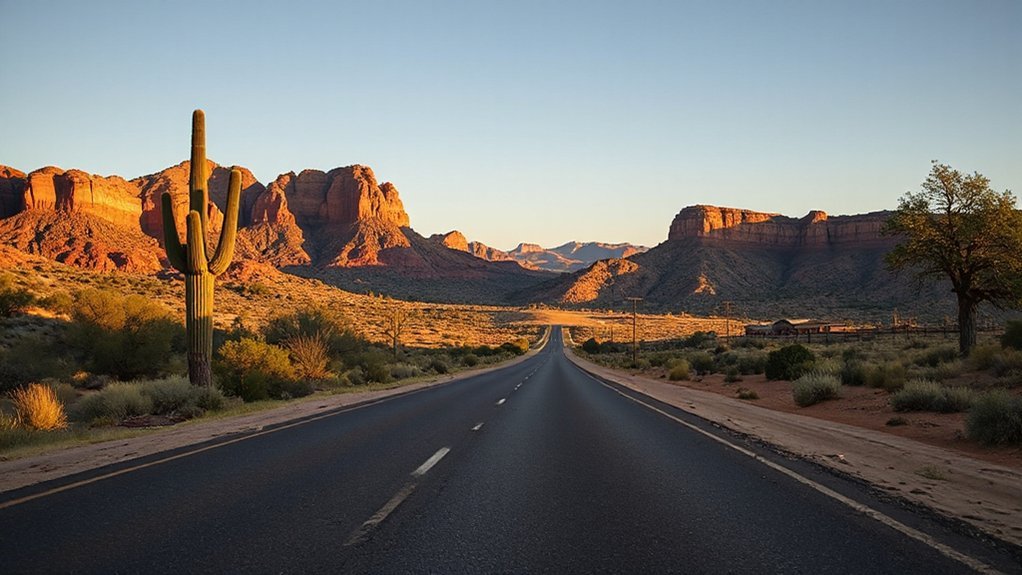
Despite the desert sun yelling noon in January, the state tells the clock to sit down and behave. You keep Mountain Standard Time, year‑round, no apology. Tourists argue with microwave ovens. Phones flip. You don’t. That’s the point. Less whiplash, less fake “extra” light, more sanity.
But there’s the Navajo Nation. It springs forward. Why? Administrative coordination with chapters spread into New Mexico and Utah. People need one schedule, not a roulette wheel. So you cross a line near Tuba City and bam, you’re an hour ahead. Then the Hopi Reservation—inside Navajo—stays like Arizona. Another flip. Drive again and you’re back. That’s a clock mismatch baked into the map. Confusing? Sure. Unmanageable? No. You adapt, you check the sign, you move. No excuses. Now.
Hawaii’s Year‑Round Standard Time

You want daylight sanity, right? Hawaii said yes and ditched the clock circus because near the equator the sun barely budges across seasons, so shifting hours is pointless. No DST there since 1967—nearly six decades of calm—so tell me why you’re still playing time roulette back home.
Why Hawaii Opted Out
Because the sun in Hawaii doesn’t swing wildly with the seasons, the state called the clock game what it is—pointless theater—and sat it out. You don’t need pretend daylight. You need sanity. No spring-forward hangovers. No fall-back lies. Schools start on time. Surf sessions do too. Airlines stop fumbling. So do military scheduling and maritime operations. Traders sync with the mainland without groggy mistakes. Tourists adjust once, not twice. Simple wins.
You want logic? Here it is. DST solves nothing here. It only scrambles watches and wrecks sleep. Health suffers. Crashes spike. For what—an hour of fake “savings”? Hard pass. Hawaii chose clarity over chaos. One clock. All year. You may love drama. Hawaii doesn’t. It keeps time. You keep up. Right now, seriously.
Near-Equatorial Daylight Consistency
While the mainland chases the sun like a lost dog, Hawaii barely sees it budge. You stand near the equator. Day length shrugs. Winter, summer, same script. Sunrise around six-ish, sunset around six-ish. Not perfect, but close enough to laugh at clock games. That’s Solar geometry, not magic. Short axial tilt leverage. Tight daylight swing. Your body notices. Circadian ecology stays steady, calmer, less whip-saw. You wake, you move, you rest, on repeat. No drama. Tourists whine about jet lag; locals roll eyes and surf. You want proof? Watch school bells, morning runs, evening grills. They land on rhythm, not roulette. Consistency breeds sanity. You don’t chase light; it shows up. Predictable. Relentless. Like waves hammering lava, time behaves. Simple, stubborn, and gloriously stable.
No DST Since 1967
Since 1967, Hawaii slammed the brakes on clock games.
You inherit the calm. No spring forward. No groggy Monday. You wake when the sun says so, not some fussy committee. Radical, right? Meanwhile mainland clocks lurch like nervous pigeons. You shrug. You swim. You work. Time holds. Look it up—archival research backs the move: tourism steady, kids less cranky, farmers not hostage to lobbyists. You want drama? Try changing nothing. It wins. Every year you celebrate a quiet anniversary commemoration by doing absolutely zero. Set it and forget it. Tell your friends to stop worshiping jet‑lag rituals. The equator doesn’t care. Neither should you. Keep standard time, year round, like a promise. Simple beats clever. Stability beats cute tricks. Admit it. You want peace.
U.S. Territories That Skip the Time Change

A handful of U.S. territories don’t play the daylight saving game at all, and they’re not sorry. You want names. Puerto Rico and the U.S. Virgin Islands stick with Atlantic Standard Time. Guam and the Northern Mariana Islands hold to Chamorro Standard Time. American Samoa? Samoa Time and zero drama. No spring forward. No fall back. Just clocks that mind their own business. You think that’s reckless. It’s not. It’s sane. Astronomical observations don’t need your clock tricks. Maritime navigation sure doesn’t. Flights, ships, calls—handled. Tourists grumble, locals shrug, life moves. You want chaos; they deliver calm. Remember that next time you’re hunting an hour you never lost. Or arguing with a microwave. Pick a time. Keep it. Done. Stop chasing shadows and excuses.
The Geography, Energy, and Cultural Reasons Behind Opting Out
Because geography sets the rules, your clock tricks don’t win. You can’t bully the sun. Desert noon hits hard, then lingers, so you skip the ritual and keep sane. Heat rules. Shadows matter. In the far north, winter eats daylight, summer dumps it back; you don’t need fake math to chase it. Energy follows physics, not slogans. Later sunsets jack up A/C, not savings. Earlier dawns cut lights, cool houses, calm tempers. You choose real comfort.
Culture bites too. Heritage customs set chores by sky, not bureaucracy. Ranch gates, prayer bells, fishing rhythms, school buses at gray light. People live by land. Not by a switch. You honor elders, protect kids, keep crews on time with nature. Simple. Honest. Fight me. Right now, seriously.
How Non‑Observance Affects Travel, Business, and Technology
When you cross a border and the clock doesn’t, your plans flinch.
Flights misalign.
Rides wait, then bolt.
You blame traffic. Wrong.
Sales calls slide an hour into silence, and you look unprepared.
Servers time‑out.
Group chats split reality.
Your calendar begs mercy, but you keep pushing buttons.
Stop. Build habits.
Pin time zones on every itinerary and invoice.
Ask clients, not later, now.
Use UTC for servers and logs; label local time for humans.
Double‑check app defaults that flip twice a year like pranksters.
Don’t trust vague invites.
Repeat.
Because missing one minute can cost a day.
| Issue | What Happens | Your Move |
|---|---|---|
| Airport pickup | Phone says 4, gate says 5 | Confirm time zone |
| Logs | Timestamp discrepancies wreck audits | Force UTC, enable calendar synchronization |
Health and Safety Research on Time Changes vs. Fixed Time
Though the clock only jumps an hour, your body pays like it got mugged. You feel it. Research backs it. After spring forward, hospitals see more heart attacks, more strokes, more crashes. You’re not special. It’s sleep disruption, plain and brutal. Your brain lags, your reflexes wobble, your temper pops. Workplace injuries spike, especially on Mondays, with nastier cuts and falls. For what, a cute sunset? Please. Studies show fixed time steadies circadian rhythm and mood. Fewer drowsy commutes. Cleaner reaction time. Better test scores. Safer roads. You perform, not pretend. Try driving alert instead of gambling with jet lag. Your kids too. Stop treating clocks like toys and bodies like props. Pick consistency. Protect sleep. Protect everyone. Do the boring thing: rest well.
The Policy Landscape and What Could Change Next
If you’re waiting for Congress to fix the clock mess, don’t hold your breath. You’ve seen this movie. Endless hearings, zero payoff. States can ditch DST only by sticking to standard time, thanks to federal rules. Want permanent daylight time? You need congressional action. Good luck. So what can actually move? You can push your legislature. Force resolutions. Build interstate compacts so neighboring states switch together and business stops whining. Arizona did fine. Hawaii naps. Florida shouts. Still stuck. The patchwork grows and Washington shrugs. Pressure matters. Governors hate angry mornings. Chambers hate confused shipping schedules. Make them pick a side now. Call, show up, repeat. Keep it simple: lock the clock, align the region, and dare Congress to follow. Today. Not next year.