

The clock is our compass by the Pacific, pointing us toward presence and pace. In Los Angeles, we move with bright mornings, golden evenings, and the quiet hum of PST—then the quick spring to PDT. We can plan smarter—8–10 a.m. starts, noon coast‑to‑coast touchpoints, restful light before screens—so our work breathes and our nights restore. Here’s what opens it all, and what most folks miss about those March and November shifts…
Key Takeaways
- Los Angeles follows Pacific Time: PST (UTC−8) in winter and PDT (UTC−7) during daylight saving months.
- Daylight Saving starts second Sunday in March at 2:00 a.m. (jump to 3:00) and ends first Sunday in November (fall back to 1:00).
- Morning meeting windows: 8–10 a.m. PT suit East Coast; 11 a.m.–1 p.m. PT for bi‑coastal; 2–3 p.m. PT for wrap‑ups.
- Global overlaps from LA: 7–9 a.m. PT with UK/EU, noon–2 p.m. PT with South America, 3–6 p.m. PT with Australia/East Asia.
- For quick adjustment, get bright morning sun, dim evenings, and let phones/computers auto‑update the time.
What Is Pacific Time? PST vs. PDT and UTC Offsets

Why does time feel different on the West Coast—the sun lingering over the Pacific, the day stretching just a touch longer as the sky turns tangerine? In Los Angeles, we live on Pacific Time, a rhythm with two faces—PST and PDT—each tied to a clear UTC offset. Pacific Standard Time sits at UTC−8, while Pacific Daylight Time moves to UTC−7, helping evenings hold a little more light. We trace the Abbreviation Origins to railroad timetables and telegraphs, yet today Legal Definitions anchor the zone in federal code and state practice. When we plan a call, schedule a shoot, or catch a sunset in Venice, we honor that offset, we keep presence and gratitude, and we share time with authenticity—calm, clear, and connected together.
Daylight Saving Time in Los Angeles: Start and End Dates

Though the light shifts gently across our coast, Los Angeles switches to Daylight Saving Time by clear rules—on the second Sunday in March at 2:00 a.m., we spring forward to 3:00 a.m., and on the first Sunday in November at 2:00 a.m., we fall back to 1:00 a.m., returning to standard time.
Los Angeles at 2 a.m.: spring to 3 in March, fall to 1 in November.
We honor that cadence together, noticing earlier sunsets in November, brighter evenings in March, and the simple relief of knowing the plan.
- Mark calendars—phones auto-update, ovens and cars may not.
- Expect a 23-hour spring day, a 25-hour fall night—plan kindly.
- Note Legislative History—state votes and federal rules shape changes.
- Watch Public Perception shift—some love late light, others crave steady mornings.
- Practice presence—reset routines, check alarms, step outside at dusk with gratitude.
Breathe.
Best Times to Schedule Across U.S. and Global Time Zones

From cool Pacific mornings to bright East Coast afternoons, we’ll find coast‑to‑coast overlaps that feel calm, focused, and humane—windows where your coffee’s still warm and their lunch break hasn’t ended. Last Tuesday, we met at 9 a.m. in Seattle and 12 p.m. in New York, and the call had a rare ease—voices unhurried, notes clear, a shared presence that sparked gratitude and real progress. Now let’s mark the global meeting sweet spots—London before dinner, Tokyo after breakfast, Sydney at first light—because why chase sleep when we can plan with authenticity and care, and ask, what time lets us show up at our best?
Coast to Coast Overlaps
As we stretch a meeting across three thousand miles—and sometimes across oceans—we’re not just chasing slots on a calendar, we’re creating a shared presence that respects mornings, afternoons, and the people inside them. From LA, we look east with gratitude, seeing coffee steam, late Manhattan light, and our phones buzzing at dawn. We plan by energy—creative early, analytic mid, reflective late—and we respect broadcast windows and retail peaks. Simple rhythms make overlap humane.
- Hold 8–10 a.m. PT for East Coast noon decisions.
- Use 11 a.m.–1 p.m. PT for bi‑coastal workshops, cameras on.
- Reserve 2–3 p.m. PT for wrap‑ups before New York signs off.
- Time customer calls near lunch bells, commute hums, or store openings.
- When uncertain, ask, confirm, then send a brief, kind recap.
Global Meeting Sweet Spots
How do we find hours that feel fair across oceans and calendars, and still honor real lives on both ends of the call? From Los Angeles, our sweetest overlaps land in three windows—7–9 a.m. PT for the UK and EU, noon–2 p.m. PT for South America, and 3–6 p.m. PT for Australia and much of East Asia. We name this early, we set expectations, we practice Cultural Etiquette, and we rotate tough slots with gratitude and authenticity. Think simple rituals: cameras on if possible, agendas sent a day early, Participant Preparation checked like a carry‑on. I brew coffee at dawn, a teammate lights an evening lamp, another joins after bedtime stories. We keep presence, end on time, and send clear notes, kind follow-ups promptly.
Sunrise, Sunset, and Seasonal Daylight in LA
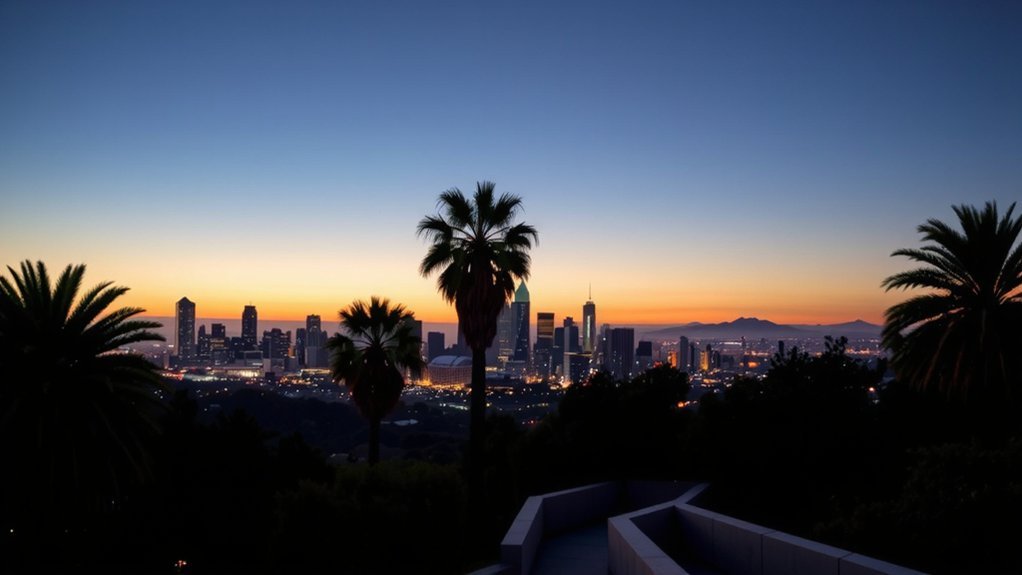
While the Pacific rolls in a cool, gray hush, we meet Los Angeles by its light—soft at dawn, bold at noon, honeyed at dusk—and we learn the city’s rhythm through sunrise and sunset. We rise with gulls and gardeners, breathe the salt, and watch Coastal Fog lift like a curtain, revealing streets warming toward Golden Hour. Winter gifts us shorter arcs, summer stretches the day wide, yet each season asks the same thing: look up, notice, be present.
- Pink edges on palms at first light, coffee steaming, quiet gratitude.
- Noon glare softening under jacarandas, shade like mercy.
- Late sun glazing stucco, canyon trails turning amber.
- Twilight planets appearing, a hush over porches and parks.
- Night breezes clearing, city lights humming with steady presence.
Notice.
Commuting, Events, and Daily Routines by the Clock

At 7 a.m., we join the city’s pulse—brake lights blinking like tiny rubies, bus doors sighing open, coffee lids warm in our hands—and we let the clock guide our steps with presence and purpose. We time our commute with patience, leaving five minutes early, choosing a lane like a mindset, steady and alert, grateful for small wins—a green wave, a driver, a song that lands right. By midmorning we reset, we breathe, we prioritize the next right task, because calm timing beats frantic speed. Lunch rhythms keep us sane—sun on a bench, tacos wrapped in paper, a quick call home. After work, Gym schedules anchor resolve, then neighborhood shows, gallery hours, and tip-off times gather us. We plan, adapt, and arrive with steady authenticity.
Travel and Jet Lag Tips When Flying To/From LA

As we plan for Pacific Time, let’s set our clocks with intention—shift meals a notch earlier, move workouts by an hour, picture that first step into LAX with warm air, neon signs, and the low hum of luggage wheels. For flights, we aim smart: red-eye eastbound so we sleep through the shift, late-morning or afternoon westbound so we land with daylight and a little gas in the tank—because who doesn’t want a gentler landing for body and mood? Manage light and melatonin with care—seek bright morning sun, wear shades in the evening, take a small dose only when needed—and carry presence, gratitude, and authenticity like a simple travel kit, steady and kind.
Pacific Time Planning
Even after a long flight into LAX, we can land with purpose and protect our rhythm—if we plan the clock as carefully as the ticket. We shift gently toward Pacific Time, anchor days with light, movement, and meals, with presence and gratitude.
- Note Payroll cutoffs, School calendars, and fixed deadlines that ignore jet lag.
- Nudge bedtime 30 minutes earlier daily, set a steady arrival wake time.
- Seek bright morning sun and easy walks; dim screens and lights at night.
- Start with simple tasks, guard deep work until focus feels honest again.
- Hydrate early, eat colorful modest meals, skip extra coffee after noon.
We won’t muscle through; we’ll pace, breathe, and show up with authenticity—arriving present, hearing the traffic, feeling ocean air reset us gently.
Optimal Flight Timing
Choose your takeoff like you’d choose a playlist—on purpose, with the mood you want to land in. For LA trips, we aim for flights that help our body meet Pacific time: eastbound, a red‑eye lets us sleep, land, and move gently; westbound, late morning departures keep us alert without hitting midnight yawns.
Book the first wave out—planes are fresh, delays drop, and Crew Rostering hasn’t stacked fatigue. Check aircraft history and Maintenance Windows; a jet coming off service runs like a tuned guitar. Plan arrivals after rush hour, feel the breeze at curbside, smell coffee, find presence. Eat on your target schedule, sip water, stretch often, and walk the aisle with gratitude and authenticity. Ask: what arrival time lets you unpack, shower, and settle?
Light and Melatonin
When we treat light like a time cue, our body listens—melatonin rises and falls on schedule, and Pacific time starts to feel like home. Light guides our hormones, so we use it with presence, patience, and intention. Darkness does the rest, calming breath and mind.
- Meet the morning: try outdoor Light Therapy for 20–30 minutes, facing east, soaking gentle brightness.
- After sunset, tame Blue Light—use warm lamps, dim devices, choose paper pages, protect that hush.
- Flying east to LA, seek late-afternoon sun; flying west, greet early light, shift mealtimes.
- On the plane, wear an eye mask, socks, and headphones—signal night, breathe slowly, release tension.
- Ask, when should melatonin rise, then aim light toward wake time and keep nights truly dark.
We adapt, with gratitude.
Remote Work and Production Scheduling: Tools and Practices

From early coffee in Seattle to late sunlight in San Diego, working on Pacific Time asks us to blend remote rhythms with reliable production clocks, so we move fast without losing presence, gratitude, or authenticity. We anchor days with a clear schedule—shared calendars, color‑coded blocks, gentle buffers—and we lean on async workflows that let work flow while people rest. A simple rule helps: morning focus, midday reviews, afternoon handoffs, night automation. We use Kanban boards for visibility and resource allocation, lightweight standups for pulse, and checklists for calm. When a shoot slid at golden hour, we shifted tasks in three clicks, posted context, and met the deadline anyway. What keeps us steady? Write it down, timebox it, then breathe, and share the plan daily.
Conclusion
We’ve learned how LA ticks—PST to PDT, dawn runs and golden-hour calls—and now it’s our turn to live it with presence and gratitude. Yesterday we synced a shoot at noon, then watched the pier glow like copper; simple, steady, on time. What if we treated time as a friendly tide, not a tyrant? Set your plan, protect your mornings, honor sunsets. With authenticity—and one trusty sundial—we’ll meet deadlines, cross coasts, and still breathe, each day.


