

The Strip’s neon becomes our compass, a bright pulse that reminds us time has a presence here. Las Vegas runs on Pacific Time—sometimes standard, sometimes daylight—so we set our clocks with intention, breathe, and plan. We match Los Angeles, trail New York by three hours, and still catch the sunrise after a late show. Want stress‑free flights, on‑time meetings, and smart sportsbook plays? Let’s get the timing right, together.
Key Takeaways
- Las Vegas uses Pacific Time, matching Los Angeles: PST in winter, PDT in summer.
- Offset: UTC−8 during PST; UTC−7 during PDT.
- Daylight Saving Time: starts second Sunday in March, ends first Sunday in November.
- Quick differences: Denver +1 hour, Chicago +2, New York +3 from Las Vegas.
- To see the exact current time, check time.gov or enable automatic time-zone on your phone.
Pacific Time in Las Vegas: PST Vs PDT

Although the Strip never seems to sleep, Las Vegas keeps time like the rest of the West—on Pacific Time, shifting between PST and PDT as the seasons change. We move with that rhythm too, honoring its Historical Adoption, when railroads and hotels sought order, and noticing today’s Legislative Debates that ask whether we should spring forward forever or settle into steady light. Picture dawn on Fremont Street—pink sky on neon, cool air on our cheeks—as clocks nudge the city awake. We feel gratitude for the clarity: PST brings crisp winter evenings, PDT stretches golden twilights for one more stroll. Want a simple rule of thumb? Remember: standard means shorter days, daylight means longer, and we’ll meet the moment with presence, humor, and authenticity today.
Current Time in Vegas and How to Check It

What time is it—really—in the city of neon and desert air, where breakfast buffets greet the pink dawn, pool water flashes at noon, and it’s the local Las Vegas time that quietly sets our pace with presence and authenticity. To check it with confidence, use reliable sources: set our phones to automatic time‑zone update, confirm with time.gov or a trusted world clock app, and cross‑check with airport boards or hotel lobby clocks. Before we book a tour or meet for a show, add “Las Vegas” to the clock list and do a 10‑second check—gratitude later beats confusion now; once, that tiny habit got us to a curtain call with minutes to spare, and the applause felt like a friendly wink.
Las Vegas Local Time
Right now, knowing the local time in Las Vegas helps us land smoothly—whether we’re stepping into neon dusk, planning a sunrise hike at Red Rock, or timing a dinner reservation with friends who fly in late. Local time here follows the city’s heartbeat, guiding Business Hours, show curtains, and our own pace so we don’t miss the moment. We glance at Clock Landmarks—the lobby grand clock, the bell at Fremont, the glowing faces above casino cages—and we breathe, present and unhurried. One night, we set our phones after a red-eye, then heard a sax on the Strip and felt gratitude for being exactly on time. Ask yourself what you want to savor, then align your steps, choose presence, and move with authentic rhythm today.
Reliable Time Sources
Often, the surest way to move in sync with Las Vegas is to lean on time sources that never guess—they sync, verify, and correct without drama. When the Strip blazes neon and the casinos hum, we trust tools that anchor us—quiet checks that bring presence, gratitude, and authenticity to a full, honest schedule.
- Check your smartphone clock—it auto-syncs to carrier network time, adjusts for Pacific Time and Daylight Saving, and stays accurate indoors or out.
- Use GPS receivers or map apps; satellite time, traced to atomic clocks, gives precise Vegas time even off-grid.
- Visit time.gov or call 303-499-7111; NIST’s reference confirms the minute and second.
We once caught a show by seconds, watching time.gov, then breathing easy as fountains leapt nearby.
Daylight Saving Dates and What They Mean

Twice a year in Las Vegas—on the second Sunday in March and the first Sunday in November—we shift with the nation, a quiet ritual that marks the seasons and asks us to notice time with a touch of presence and gratitude. At 2 a.m. we spring forward to 3 a.m., and in the fall we slip back from 2 a.m. to 1 a.m.—I still remember watching a casino clock blink and “time-travel,” the hum of slots steady while our phones leapt an hour. What does this mean for us and for you—flights, check‑ins, meetings, sunrise views?—plan buffers, set fresh alarms, confirm schedules with simple authenticity, and you’ll move through the change calm, ready, and right on time.
Start and End Dates
In early spring, Las Vegas shifts into Daylight Saving Time, and in late fall, we ease back to Standard Time—small clock changes with big daily effects. These start and end dates follow U.S. law: the second Sunday in March and the first Sunday in November, traditions shaped by Historical origins and modern needs. We feel the shift on the Strip—brighter dinners, later sunsets, a little presence and gratitude as evening lingers.
- Second Sunday in March: plan launches, sunset photos, and road trips with intention.
- First Sunday in November: recalibrate routines, savor earlier twinkle lights, breathe.
- Bridge the gap: align travel, meetings, and Fiscal quarters, confirm reservations, communicate clearly.
We hold steady, stay kind to ourselves, and make the most of light.
How Clocks Change
As March’s second Sunday arrives, our Las Vegas clocks jump ahead one hour—spring forward—and November’s first Sunday brings them back, a calm return to standard time that shapes how we move, meet, and rest. We feel the shift at dawn—the coffee tastes brighter, the strip’s neon seems to linger, our routines stretch or tuck by sixty minutes, not by chance but by design. We follow national time standards, so our phones adjust, our ovens need a nudge, and our bodies learn a new beat with patience and gratitude. Think of it as a small rehearsal for presence: we choose to notice, to breathe, to show up. Leap seconds never visit our clocks, yet they remind us time is cared for—precision and humanity together here.
Impact on Travel Plans
Those simple clock shifts become real when we travel—bags packed, alarms set, tickets ready—and the second Sunday in March and first Sunday in November carry extra weight for flights, drives, and showtimes. We plan with gratitude, then double‑check every itinerary—departure times, check‑in windows, rideshares—because an hour forward or back can blur a dawn pickup or a midnight arrival. To keep our momentum and our calm, we anchor details, we pad buffers, and we respect how daylight saving can squeeze rental availability and spark peak pricing.
- Confirm time zones on tickets, hotel apps, show emails, set devices to auto‑update.
- Arrive earlier than usual—think sunrise coffee, unhurried lines, friendly staff.
- Book cars and tables ahead, watch flexible rates, and screenshot plans in case service drops offline.
Time Differences With Major Cities

How do the clocks in Las Vegas line up with the world’s great cities, and what does that mean for our days, our calls, our plans? We sit in Pacific Time—UTC−8 in winter, UTC−7 in summer—so our offset mapping starts close to home: compared with Los Angeles we match minute for minute, with Denver we’re one hour behind, with Chicago two, with New York three. In wider city comparisons, London often sits eight hours ahead, Paris nine, while Tokyo stretches a world away at sixteen or seventeen, and Sydney can feel nearly tomorrow at seventeen to nineteen. Notice the feel of that spread, the quiet casino morning when Europe’s lights dim, the late desert sunset while Asia hums awake—we plan, we breathe, we connect.
Timing Tips for Flights, Shows, and Sportsbooks

Before we chase the neon, we plan the clock, because timing in Las Vegas shapes everything—our flights, our shows, our sportsbook wins—and a little presence now saves a lot of scramble later. We book morning arrivals to beat heat and fatigue, we buffer daylight for check‑in lines, and we set gentle alarms to catch curtain times without rushing. Airports run on Pacific Time; so do box offices and sportsbooks—let’s align.
- Use Booking Hacks: book flights six to eight weeks out, choose midweek red‑eyes, and sit close to exits—bags in hand, ride share in minutes.
- Lock show times early, then eat light and arrive thirty minutes before doors—tickets loaded, ID ready, a small sweater for chilly theaters.
- Chase line moves wisely—Reward Optimization starts with hydration.
Planning Meetings and Events Across Time Zones
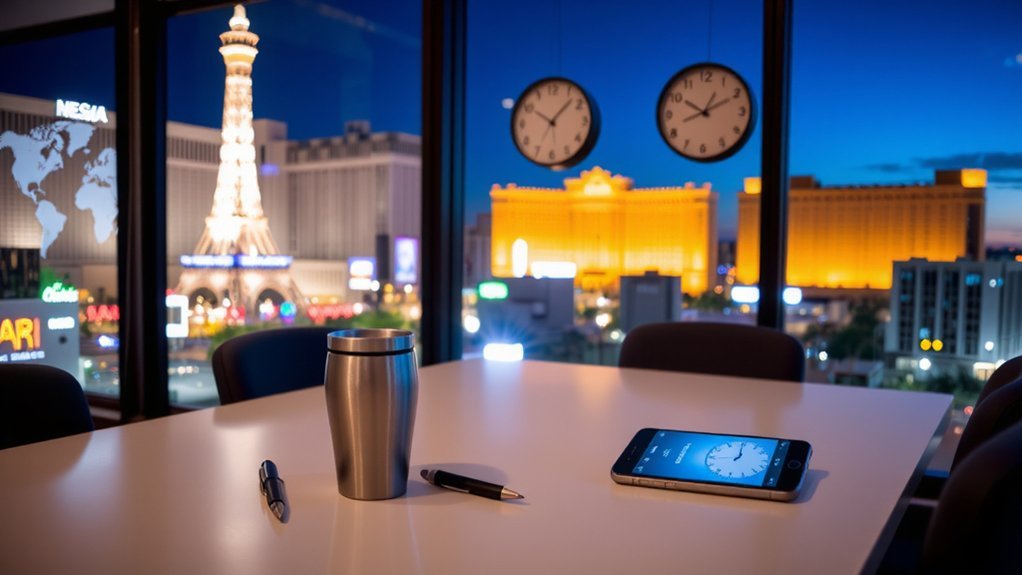
Why does a simple hour feel so slippery when Vegas glows in Pacific Time and our teams wake to different suns? We begin by naming the zone—PT—and then we anchor every invite with city, date, and offset, because clarity builds trust and presence. Use calendar integrations to auto-convert times, add brief agendas, and mark who’s in-room and who’s remote, so no one wonders where to click or when to speak. Practice virtual etiquette—arrive a few minutes early, state your role, keep cameras thoughtful, honor pauses, let gratitude travel farther than noise. When choices clash, we rotate meeting hours, we share recordings and notes, we protect boundaries. Picture a quiet suite, coffee steaming, neon muted, a planner tapping send—authenticity in action. We keep promises gently.
Jet Lag and Sleep Strategies for Vegas Visitors
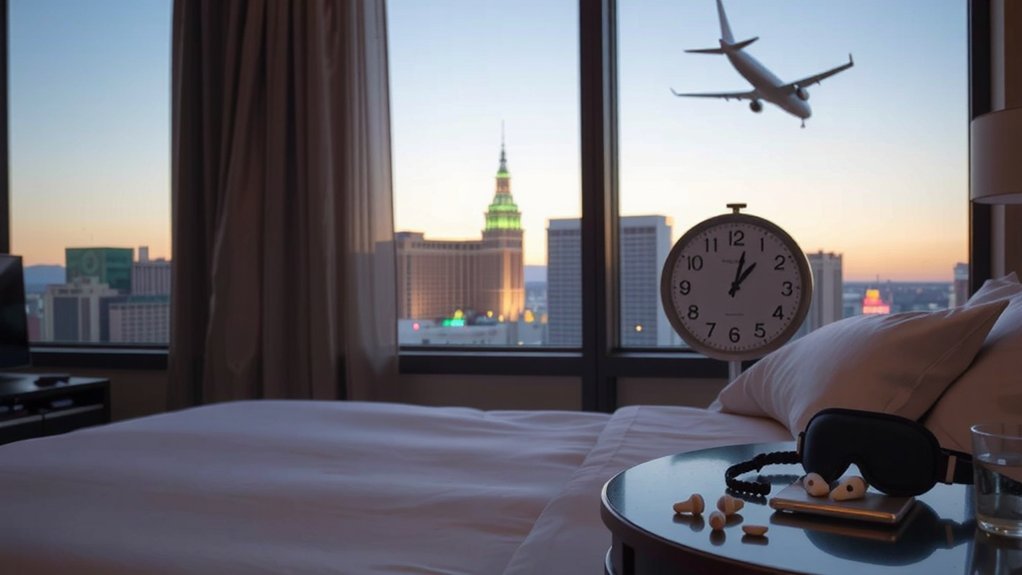
We planned our meetings with care, and now we care for our bodies, too—because Las Vegas runs on Pacific Time while our inner clocks keep their own stubborn beat. So we arrive with presence and gratitude, hydrate early, and treat light like a friendly tool. Morning sun pulls us forward; bright hotel corridors do the same—nights stay dim, screens low. Noise management matters in this town of clinking chips and humming vents, so we pack earplugs, request a high floor, and let quiet be our anchor. Before bed, we follow Melatonin guidance from our doctor, start low, and stay consistent. Want a simple plan?
Hydrate early, chase morning light, dim nights, guard quiet, honor melatonin—and let Vegas meet your rhythm.
- Shift bedtime 30–60 minutes for three nights.
- Drink water, limit booze after dusk.
- Walk outside at sunrise for steady energy.
Conclusion
Time in Vegas isn’t just numbers—it’s a rhythm we can ride. We set phones to auto, label every plan PT, and breathe easier, whether clocks spring forward or slide back. We once caught a sunrise on the Strip after a red‑eye, coffee steaming, resolve sharper than neon. So let’s honor presence and practicality, schedule smart across cities, and sleep with gratitude. Miss a minute? Not us—we’ll meet lights on time, with authenticity, energy, and calm.


