Hawaii’s clocks shift exactly 0 minutes each year—no spring forward, no fall back. We stand in UTC−10:00, steady as the trade winds, grateful for a rhythm that feels honest and calm. But why does this island chain keep time so differently, and how do we schedule with authenticity across the mainland’s moving targets? Picture warm dawns, unhurried sunsets, and clear plans—then ask yourself what that consistency makes possible next.
Key Takeaways
- Hawaii Standard Time (HST) is fixed at UTC−10:00; clocks never change.
- Hawaii doesn’t observe Daylight Saving Time; near-equatorial daylight makes DST energy savings negligible.
- Mainland gaps shift: New York is 5 hours ahead in winter, 6 in summer; Pacific is 2–3 hours ahead.
- Sunrises and sunsets barely drift year‑round, keeping daily rhythms simple and predictable.
- To see the current time, add HST to your world clock or set devices to automatic time.
Where Hawaii Sits on the Global Clock (HST and UTC−10:00)

Longitude becomes a quiet compass here: Hawaii keeps Hawaii Standard Time, HST, fixed at UTC−10:00, so we sit ten hours behind Coordinated Universal Time and we don’t change our clocks for daylight saving. Our Longitude Position sets a calm rhythm—sunrise blooms early, trade winds hum at lunch, stars spill over dinner—and our UTC Offset keeps schedules simple, steady, and honest. Think of calling a friend in New York; we subtract five hours in winter and six in summer, then breathe, then speak with presence. Planning a flight, a surf, a meeting? Anchor it to HST, and let the islands lead. We stand west of most of America yet east of tomorrow, a mindful edge where patience grows, gratitude deepens, and time feels wonderfully spacious.
Why Hawaii Doesn’t Observe Daylight Saving Time

We stand with you on a humid Kailua morning, plumeria on the breeze, and we notice the sun keeps near‑equatorial hours—steady dawns, unhurried dusks—so shifting clocks would add fuss without purpose. With little need for extra heating or late‑night lighting, the energy savings land near zero, so why chase minutes that don’t give back—especially when they muddle flight times, calls with family, and our daily presence? So, following both practicality and authenticity, Hawaii made a clear policy choice in the 1960s not to observe Daylight Saving Time, and we honor that decision with gratitude—keep your watch simple, trust the light, and move through the day at island speed.
Near-Equatorial Daylight Consistency
Because the islands sit close to the equator, our daylight stays steady through the year—sunrise and sunset barely drift, so there’s no real need to “save” light with a clock change. We wake to soft gold and end with dusky pink, month after month, which keeps our plans simple and our bodies calm. Consider how this steadiness shapes daily life:
- Circadian Stability comes naturally—we rise, work, and rest with an easy rhythm, feeling presence and gratitude instead of hurry.
- Agricultural Rhythms stay predictable; farmers time irrigation, fishers time launches, kids time chores, all with reliable light.
- Travelers adjust quickly; jet lag fades faster when dusk and dawn behave.
We honor this constancy—breathe, notice the horizon, then move with authentic, steady joy.
Energy Savings Negligible
Steady sunrises and sunsets do more than calm our bodies—they also make clock changes pointless for saving power. With daylight staying steady near the equator, shifting the hour doesn’t shrink our evening lights; it just moves routines on paper, not in practice.
We see the bigger gains elsewhere—building efficiency that keeps homes cool without waste, appliance modernization that sips electricity, and mindful habits that match our island rhythm. Think of a dawn paddle, the ocean pink and quiet, fans barely spinning, coffee warm in hand—that’s real presence, not a forced schedule. Ask yourself: would a later sunset change your usage, or would you still cook, read, and rest the same? Honor consistency, invest in upgrades, feel gratitude in savings, and keep our days authentic.
Historical Policy Choice
While the mainland tinkered with springing forward and falling back, Hawaiʻi made a deliberate choice—rooted in place, guided by common sense—to stay on standard time year‑round. We listened to the sun, the trade winds, the steady rhythm of dawn and pau hana, and we honored what fits our latitude. The story includes history, feelings, and practical steps we can still learn from:
- We recognized minimal daylight shift near the tropics, so moving clocks solved nothing, while daily life—schools, farms, surf—already flowed with light.
- We faced Colonial influence with quiet resolve, choosing local needs over mainland fashion, protecting presence and authenticity.
- We held Legislative debates, weighed costs, heard kupuna voices, and kept a policy that offers clarity, gratitude, and calm.
That’s our time, with aloha.
How Hawaii’s Time Differs From the Mainland U.S

We keep steady time in Hawaii—no Daylight Saving, no clock flips—so we can move through our days with presence, gratitude, and a calm rhythm. Meanwhile the mainland shifts twice a year, and our gap stretches or shrinks accordingly—2 hours to the Pacific in winter but 3 in summer, 5 to the Eastern in winter but 6 in summer—so why not plan with that wider offset in mind. Imagine this: we set a sunset call with family, palms rustling and ocean light on our faces, while they’re finishing dinner or starting tomorrow—check the difference, honor authenticity, and stay connected with care.
No Daylight Saving
Often, the islands keep their own gentle pace—Hawaii doesn’t observe Daylight Saving Time, so our clocks never spring forward or fall back, and our days carry a calm, year‑round steadiness. We wake to the same honest dawn, we tuck in under the same soft dusk, and our routines breathe with presence and gratitude. That steady rhythm supports Circadian health, keeps School schedules predictable, and quiets the rush that resets bring. I remember brewing coffee on a March morning, no frantic clock-change scramble—just birdsong, light on the palms, and an easy smile. Want to live with that simplicity? Try these:
- Keep one bedtime, even on weekends.
- Plan meetings by natural light cues.
- Set reminders for mainland shifts, not your soul.
Breathe, stay steady, move gently.
Wider Time Offsets
Because our islands sit on Hawaii–Aleutian Standard Time—UTC−10—our days unfold a little earlier than the mainland’s clocks suggest, and those gaps widen when the continent springs forward. When Los Angeles wakes, we’ve felt the trade winds, brewed coffee, and watched the sun lift over ocean glass, so planning becomes an art of presence and patience. Meetings shift by hours, emails arrive while we sleep, and Shipping Logistics stretch across dusk and dawn—yet with a plan, we stay steady. Need a cue? Set two calendars, build buffers, and honor Broadcast Coordination so live events don’t fade past bedtime. I once called a New York teammate at sunrise, waves in the background, and heard gratitude bloom. Let’s lean into the difference, with authenticity and calm resolve.
Converting Hawaii Time to Your Local Time

How do we translate island sunrise to your kitchen clock—simply, calmly, and with a little gratitude for time’s steady rhythm? We start by noticing that Hawaii doesn’t change clocks, so we anchor on Hawaii Standard Time and add or subtract clean, steady offsets, breathing easy as numbers line up.
1) Check the current UTC offset for your city, then compare it with HST (UTC−10), noting seasonal shifts on your side, not Hawaii’s.
2) Use clear Time notation—24‑hour if possible—so 7:00 and 19:00 never blur, and Date ambiguity stays quiet when midnight approaches.
3) Confirm the day: when we’re waking, you might be tomorrow, so mark the calendar, write it down, and feel the presence of honest, shared minutes.
We’ve got this, steady and clear.
Scheduling Travel, Meetings, and Calls Across Time Zones
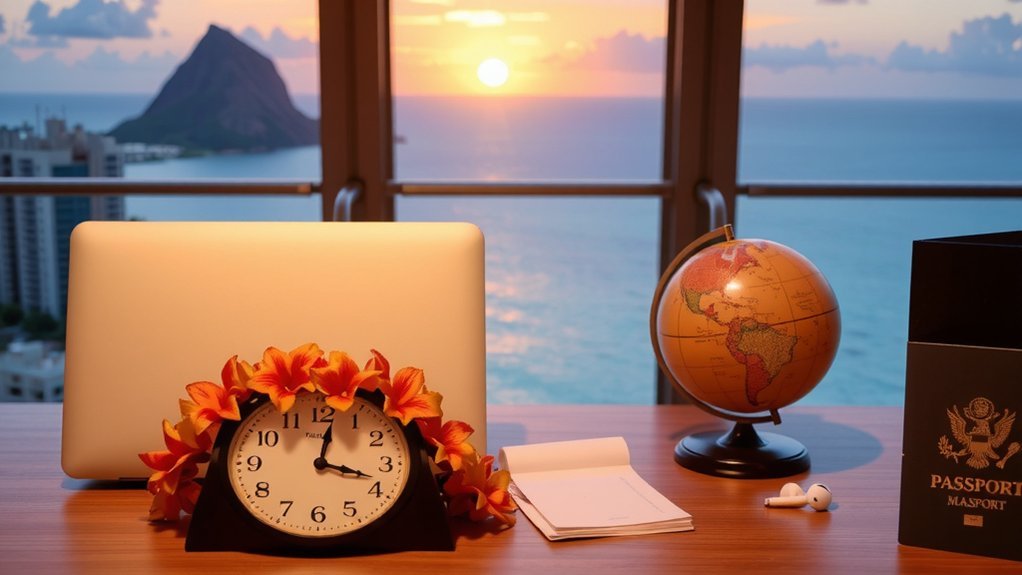
Now that we can read HST against our own clocks with steady ease, we can plan the moments that bring us together—flights, stand-ups, family calls—without second-guessing the hour. We block travel with wide margins, we pad layovers, and we choose arrivals that let us breathe salt air before meetings. Let Calendar automation do the math, then confirm by voice or text, because clarity builds trust. We practice Cross cultural etiquette—announce time zones, spell out dates, and avoid dawn pings—so everyone shows up with presence and gratitude. When we book a call, we offer two windows, we note who’s on camera, and we end five minutes early. Missed something? Send a recap, own the gap, try again with kindness and authenticity. We learn, we adjust.
Historical Timeline of Timekeeping in the Islands

Before wristwatches and flight boards, we kept time in the islands by what we could feel and see—the slant of sun on lava rock, the pull of tides at dawn, the first stars that rose over the canoe’s bow.
- Wayfinding era: we read swells and wind, chanted star names, kept course by the canoe’s hum.
- Harbor age: bells, sugar mills, and Maritime Chronometers set shifts, a clock in a store window set town pace.
- Telegraph Adoption and standard time: cables linked Honolulu, the Territory fixed Hawaii Standard Time, later moving from GMT−10:30 to −10:00.
Through each change, we chose precision without surrendering heart, asking what serves community best. Let’s keep time with gratitude and authenticity, simple, and true, even as the world speeds up.
Sunrise, Sunset, and Seasonal Daylight in Hawaii

At first light in Hawaiʻi, we meet a steady rhythm—days that lengthen and shorten only a little, sunrise and sunset sliding by minutes rather than hours, the seasons changing more in color and angle than in sheer length of day.
We rise with the sea’s Coastal Glow, and we breathe with the hills as Mountain Shadows trace the valleys, soft and sure. Being near the tropics keeps daylight balanced, a comforting promise, a quiet invitation to show up with presence. Winter brings slightly later dawns, summer offers slightly longer afternoons, yet every evening arrives with familiar grace. We notice birds start earlier, fishermen talk about the tide, keiki laugh at the first star. Let’s hold gratitude for this gentle clock—steady, humble, and beautifully authentic.
Practical Tips and Tools for Staying in Sync

Syncing with island time starts with simple habits and smart tools—we set our phones to automatic time, add a world clock for home and the mainland, and label calendar events with HST so Daylight Saving shifts never surprise us. We lean on watch faces that show multiple zones, glance at sunrise colors to anchor presence, and use sleep trackers to protect rhythm when red-eye flights tempt us. What’s our mantra? Plan ahead, move gently, adjust quickly.
- Block buffers—arrive ten minutes early, leave ten minutes late, breathe between calls.
- Pin HST to every meeting invite, and confirm the conversion with a second app.
- Set daily check-ins—morning gratitude, midday stretch, evening reset—so our pace stays steady, our focus honest, our kindness authentic, today and every trip.
Conclusion
We’ve learned why Hawaii keeps HST—steady, simple, unfussy—and how to sync with the mainland without stress. Picture golden light on palm fronds, a quiet clock that doesn’t jump, like a canoe gliding on glassy water. When we schedule calls, book flights, or plan beach sunrises, let’s confirm dates and zones, honor presence and authenticity, and breathe. What if time felt like gratitude in motion? Stay curious, compare offsets, set reminders—travel well, connect well, each day.