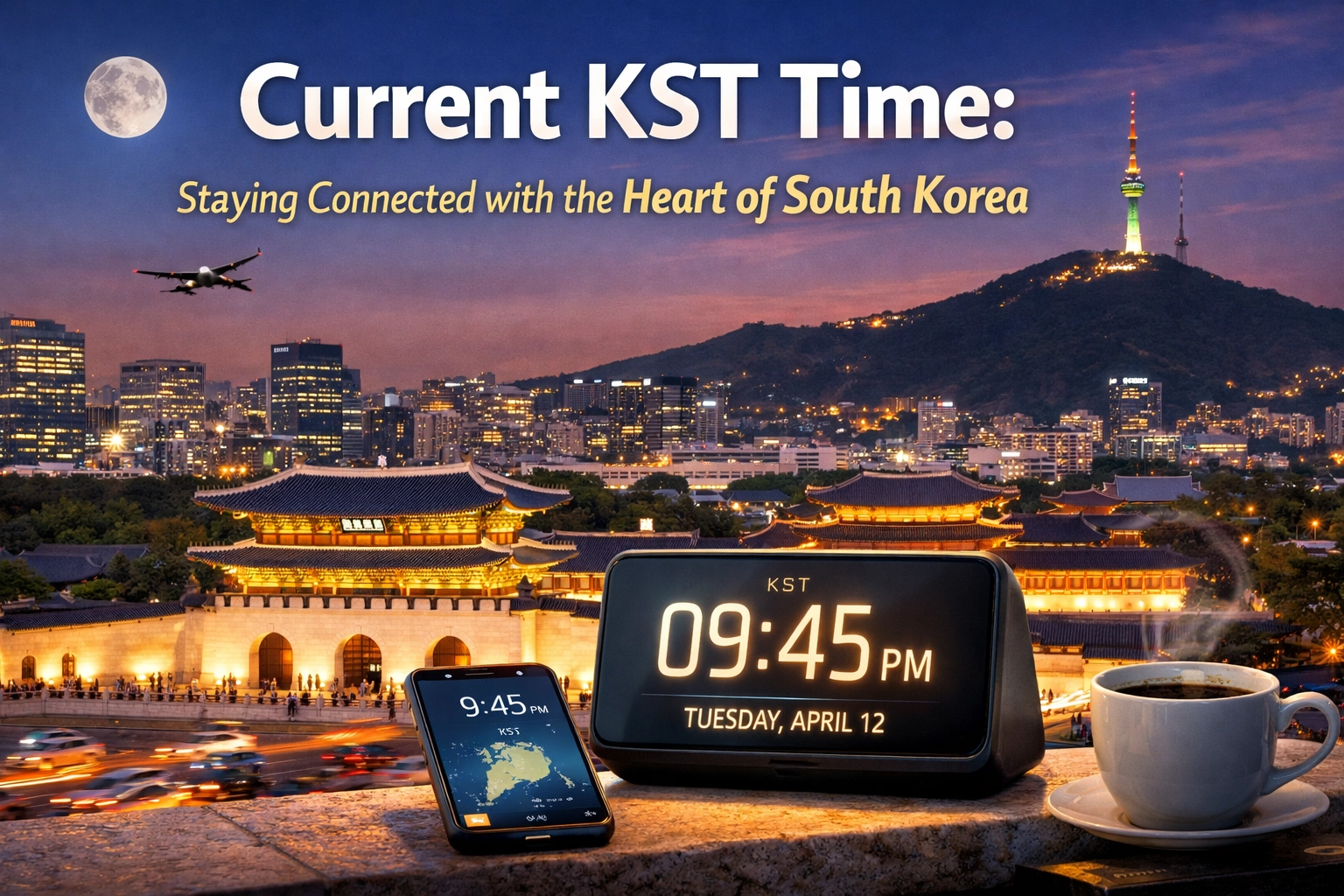

You are standing at the intersection of tradition and the hyper-digital future. Whether you are tracking a high-stakes semiconductor deal in Seoul, waiting for a midnight K-Pop "comeback" drop, or coordinating a remote team across the Pacific, the current KST time is your primary pulse. South Korea doesn’t just run on a clock; it runs on an relentless, high-octane energy known as "Pali-Pali" (hurry-hurry). To keep up, you must master the mechanics of Korea Standard Time.
South Korea operates at a constant UTC+9. Unlike many Western nations that fiddle with their clocks twice a year, South Korea is a bastion of temporal consistency. You will find no Daylight Saving Time here. The rhythm is steady, predictable, and incredibly fast.
The Logistics: Understanding the UTC+9 Engine
To navigate the South Korean business landscape or entertainment cycle, you must first grasp the clinical precision of their offset. KST is nine hours ahead of Coordinated Universal Time. When the world resets at midnight UTC, Seoul is already sipping its first iced Americano at 9:00 AM.
You will observe that this lack of Daylight Saving Time (DST) creates a shifting gap between Seoul and cities like New York or London. When London moves to BST, the gap narrows; when they return to GMT, it widens. You'll need to remain vigilant. Trusting a static "14-hour difference" is a recipe for missed meetings and "itinerary frustration."
The Hallyu Pulse: Timing Your K-Pop and K-Drama Obsession
For the global fan, the current KST time is the difference between being the first to see a viral teaser and catching the spoilers on social media. The South Korean entertainment industry is a well-oiled machine that prioritizes KST above all else.
- Music Bank and Music Core: Live broadcasts typically hit the airwaves in the late afternoon or early evening KST. If you are in New York, you'll be waking up at the crack of dawn to catch the live stream.
- Digital Drops: Major labels like HYBE or SM Entertainment often drop music videos at exactly 6:00 PM KST. You will need to calculate your local offset precisely to be part of the "premiere" count.
- Drama Simulcasts: Platforms like Viki or Netflix often sync their releases with the Seoul broadcast schedule. Knowing the current KST time ensures you are ready the moment the subtitles hit the server.
You won't just be watching; you'll be participating in a global cultural phenomenon that pivots around a single time zone. Precision is non-negotiable. Period.
The Business Grind: Navigating the "Pali-Pali" Culture
If you are a business traveler or a remote executive, the current KST time dictates your professional survival. Seoul’s business districts, from the skyscraper-lined Teheran-ro in Gangnam to the historic hubs of Jongno, operate on a culture of extreme responsiveness.
Expect emails sent at 9:00 AM KST to be answered before your morning coffee is cold. To compete, you must align your "active hours" with the Seoul workday. You will find that the most productive window for cross-border collaboration is between 9:00 AM and 11:00 AM KST, which aligns with the previous evening in the United States or the early morning in Europe.
Strategic Tip: If you are managing a team in South Korea, respect the "Hoesik" (dinner gatherings). While work ends officially around 6:00 PM or 7:00 PM, the social bonding: and often the real decision-making: happens over barbecue and soju late into the night. Don't expect immediate replies during these hours. Master the etiquette of the "after-hours" clock to gain deeper perspective and influence.
Real-Time Conversion: Your Global Shortcuts
Navigating the gap between your local desk and the neon-slick streets of Seoul requires a mental map of these key offsets.
- New York (EST/EDT): You are typically 13 to 14 hours behind Seoul. If it’s 10:00 PM in NYC, it’s already the next morning in the "Land of the Morning Calm."
- London (GMT/BST): You are 8 to 9 hours behind. Your workday start is their workday end.
- Los Angeles (PST/PDT): The gap is 16 to 17 hours. You are essentially living in their yesterday.
- Istanbul: You are usually 6 hours behind. Check the current time in Istanbul to calibrate your Middle Eastern connections with your East Asian ones.
Prioritize using a world clock tool that accounts for the lack of DST in Korea. This is a "low-hanging fruit" hack that prevents 3:00 AM wake-up calls that were actually meant for 4:00 AM.
Remote Work and Digital Nomadism in South Korea
South Korea is a dream for the digital nomad, provided you can hack the time zone. With the world's fastest internet and a 24-hour convenience store culture, you can work any schedule. However, if your clients are in North America, you'll be living a "vampire" lifestyle.
You'll stay in cafes like those in Hongdae or Seongsu-dong, where the "espresso steam" and high-speed Wi-Fi keep the "electric energy" flowing at 2:00 AM. Many nomads choose to work from 11:00 PM KST to 7:00 AM KST to stay in sync with Western markets.
To manage this, you must:
- Invest in high-quality blackout curtains for your "officetel."
- Leverage the 24-hour food delivery apps (like Baemin) to fuel your midnight "lunch."
- Consult our guide on confessions of a remote worker to avoid burnout while juggling the current KST time.

Logistics for the Frequent Traveler
Flying into Incheon International Airport (ICN)? Your battle with jet lag begins the moment you step off the plane. The goal is to synchronize with KST immediately.
- Hydrate aggressively. The dry cabin air is your enemy.
- Force the rhythm. If you land at 10:00 AM KST, do not sleep. Walk the streets of Myeongdong, soak in the sunlight, and stay awake until at least 9:00 PM local time.
- Trust the tech. Use apps to track your around the world journey so you know exactly when to transition your biological clock.
Why KST Never Changes (And Why That Matters)
The stability of Korea Standard Time is a logistical blessing. While other nations debate the Daylight Saving Time debate, South Korea remains fixed at UTC+9. This was not always the case; historically, Korea experimented with DST during the 1950s and again in the late 1980s for the Seoul Olympics.
Today, the government prioritizes a consistent schedule for its massive manufacturing and export industries. When you deal with South Korea, you deal with a nation that values "resilience" and "predictability." You can set your watch by it. Literally.
Final Technical Briefing
- Time Zone Name: Korea Standard Time (KST)
- Military Designation: I (Item)
- Offset: UTC +9 hours
- Standard City: Seoul
- Daylight Saving: None.

Stay Ahead of the Curve
In a world that is increasingly interconnected, the current KST time is more than just a number: it’s an entry point into one of the most dynamic economies and cultures on the planet. Whether you are a business mogul or a dedicated fan, your ability to navigate the UTC+9 offset will define your success.
Master the clock. Navigate the gap. Prioritize precision.
For more deep dives into how the world keeps time, explore our major international cities guide or check our post sitemap for specific city breakdowns. Stay synchronized, stay informed, and never miss a beat in the heart of South Korea.