You live in a country five time zones wide, yet one clock bosses you around. Beijing Time. Neat, tidy, unblinking. Politics loves a single number. Trains do too. Your sunrise? Optional. In Xinjiang people run two hours behind like rebels with wristwatches. School at dawn, dinner at dusk, coffee at midnight—sure. Unity or control. Convenience or jet lag at home. Pick a side—or wait till the sun argues back.
Key Takeaways
- Adopted in 1949 to promote national unity and centralized governance.
- Legalized Beijing Time as sole standard to streamline administration and communication.
- Single clock synchronizes railways, aviation, broadcasting, and nationwide markets for efficiency.
- Timekeeping technology enabled uniform enforcement across vast distances.
- Despite five natural zones, China prioritizes cohesion and efficiency over local solar alignment; regions adapt informally.
A Country Spanning Five Natural Time Zones
Although you might think one clock fits all, China laughs at that. You stretch a map and feel it snap. From Pamir dusk to Pacific dawn, you chase light and lose. Five natural time zones, packed tight, like a fist. You want neat hours. Tough. Mountains stall sunrise. Deserts bake early. Coasts linger late. Your schedule? It stumbles.
You cross provinces and watch shadows sprint. Noon refuses to sit still. Agriculture adjusts, trains hustle, markets blink awake off-beat. Nature mocks uniformity. Climate variation slams you with dry cold here, humid heat there, sometimes in the same week. Biodiversity gradients stack like shelves, each rung timed by sun not slogans. Admit it. You can’t bully longitude. You adapt or miss the moment. Right now, really.
The 1949 Decision to Standardize on Beijing Time

You want unity, not excuses, so in 1949 you wrench the nation’s clock to Beijing because politics beats sunsets. Regional time zones? Abolished, erased, smashed—everyone marches to one tick. Call it national cohesion, call it control, but you eat breakfast in darkness out west and swear it’s order, right now, like it or not.
Political Unification Rationale
When the new PRC drew a single line through time in 1949, it wasn’t about sunrise; it was about power. You know it. One clock, one center, one message: obey. You streamline command, you crush drift. Administrative efficiency, yes, but also theater. Beijing speaks, the nation ticks. You hate chaos? Then stop romanticizing sunsets. Leaders wanted speed, uniform orders, rail timetables that didn’t argue. Factories in sync. Cadres on cue. And beyond the border, you signal muscle. International diplomacy needs clarity, not provinces bickering over minutes. Allies read discipline. Rivals read resolve. You can call it blunt. It is. Symbols move people faster than memos. A single hour slams doubt. You feel it. You follow it. That’s the point—unity first, complaints later. Not negotiable.
Abolished Regional Time Zones
After 1949, Beijing killed the map of clocks. You watched five zones vanish. Northwest noon got dragged to the capital. Sunrise? Too early. Sunset? Too late. Tough. Officials didn’t ask. They ordered. You set your watch or you stood out. Radio ticked the new beat, and trains snapped to it like soldiers. That’s Legal Codification with teeth. One statute. One standard. No debate. Timekeeping Technology did the dirty work, quietly relentless, pushing a single second into every school bell and factory siren. You felt it in breakfast and bedtimes. In prayers. In pay. Convenience bragged. Friction bled. Farmers squinted. Clerks yawned. Schedules won anyway. You can grumble, sure, but you still sync. Try living off‑grid. Your phone drags you back. Every. Single. Day. Again.
National Cohesion Objectives
Because chaos looked like weakness, the new rulers nailed the country to Beijing time. You get one clock. One anthem. One beat. Provinces fall in line or look lost. In 1949, unity wasn’t a slogan, it was a survival plan. So they cut the clutter. Five zones? Cute. They picked one and dared you to blink. Trains, schools, broadcasts—march together. You feel the rhythm because they pump it daily through education campaigns and relentless media narratives. Noon in Kashgar? Pretend. The map says noon in Beijing, so you nod and move. That’s nation‑building by wristwatch. Efficient, yes. Comfortable, not always. But cohesion hates debate. You want order? Pay in minutes. You want identity? Set your alarm. Live it, wear it, argue later, obey now.
Politics, Unity, and the Symbolism of a Single Clock
Why does one clock rule a continent-sized country? Because power loves clean lines. One time. One beat. One center. You see the trick. The map bends around Beijing, not the other way. It’s politics dressed as harmony, propaganda aesthetics wrapped in punctuality. You’re told it’s efficient. It’s elegant. Sure. And I’m the moon. The message is louder than any bell: fall in step. Identity engineering by the minute hand. Unity, not by agreement, but by countdown. You don’t negotiate with the sun; you obey the capital. The clock becomes a flag, a border, a drum. You feel it in slogans, ceremonies, televised smiles. Precision equals loyalty. Dissent looks late. And late looks guilty. Tick. Tock. Your move. Set the hour, set the crowd marching.
How One Time Zone Shapes Daily Life Across Regions
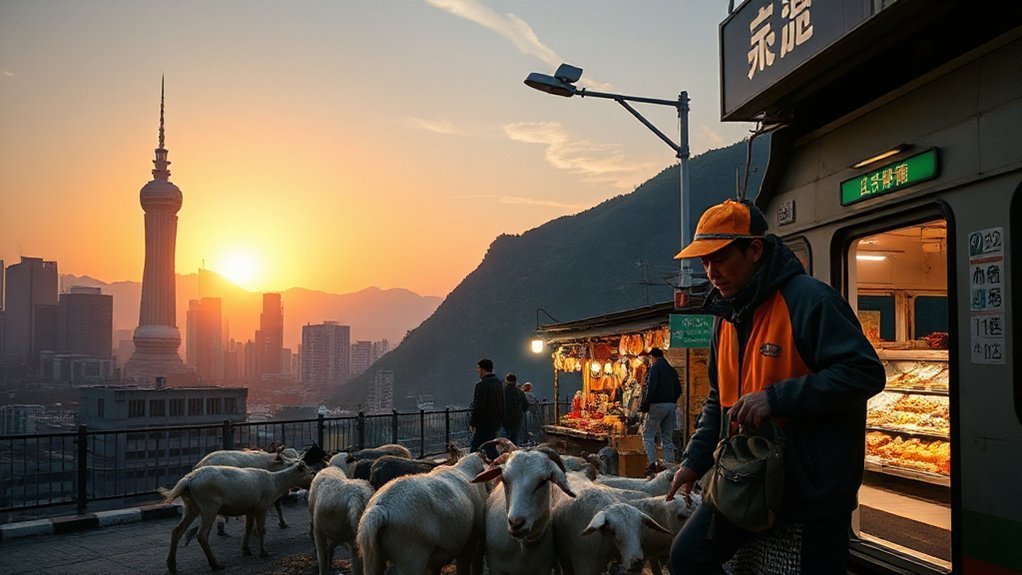
Though the clock says noon, Xinjiang eats breakfast. You feel the mismatch in your bones. Shadows say morning while schedules scream midday. School bells jump ahead. Kids yawn, then sprint. Offices open before the sun bothers to show. You juggle meal timing like a street performer, toast at noon, dinner after midnight. Jarring? Absolutely. But you adapt because the clock refuses to bend.
You want harmony at home. Fine. Rewrite family routines. Wake earlier, nap hard, eat when your body begs not when the digits brag. Parents become air-traffic controllers. Grandma cooks at nine but calls it lunch. You plan workouts in dusk pretending it’s afternoon. You chase daylight, then lose it, then laugh. Because everyone’s now collides, and you keep moving every day.
Xinjiang Time: Informal Local Practice vs. Official Time

You’re forced to live by Official Beijing Time, but your sun laughs in your face. In Xinjiang you check two clocks—one for the state, one for your real morning—because noon at 2 p.m. isn’t cute, it’s chaos. So which do you obey right now—the rulebook on paper, or the unofficial Xinjiang time everyone whispers, texts, and actually uses?
Official Beijing Time
Even as the state orders one clock, Xinjiang lives by two. You answer to Official Beijing Time, period. UTC+8, stamped into law, drilled into schedules, blasted from stations. The legal definitions leave no wiggle room, and you know it. Banks open by Beijing. Courts file by Beijing. Trains, planes, satellites, the whole timekeeping infrastructure clicks to the same second. You can grumble, but the rails don’t wait. You sync your phone, or you miss the meeting. Simple. Central power loves simple, and you feel the weight. Beijing Time stitches a giant country into one impatient pulse—unified, loud, relentless. Is it perfect? No. Is it negotiable? Not for anything that counts. You want services, paychecks, proof of life? Then set the clock. Now. Do it.
Unofficial Xinjiang Time
Because the law shouts one time, the street whispers another. You land in Ürümqi, check your phone, and instantly argue with the sun. Locals say two hours back. Officials say don’t you dare. So you juggle both like flaming clocks. Breakfast at eleven that’s actually nine. Buses post Beijing. Markets run Xinjiang. Your brain sizzles. You adapt or you’re late and hungry. Call it terminology evolution if you want, but it’s survival by schedule. Shopkeepers wink. Teachers split bells. Flights obey the center, dinners obey the sky. You laugh, then swear, then laugh again. Internet memes mock your jet lag without flying. Two times. One street. Pick wrong, pay fast. You’re not confused. You’re bilingual in time. Congratulations, clockfighter. Now set your watch twice.
Impacts on Business, Markets, and Transportation
While China runs on one official clock, business doesn’t blink—it sprints, stumbles, then sprints again. You chase Beijing time because the market demands one drumbeat. Traders love it. Factories hate it. You open early, close late, and still miss a call. Trading synchronization saves seconds, not headaches. Rail bosses brag about precise freight scheduling, then watch sunrise lag behind departure boards. Ports move like drill teams. Trucks? They move or they die. You coordinate across five natural zones with one blunt hour hand. Meetings land clean, then collide with reality. You win speed, you lose nuance. Deals clear fast. Mistakes clear faster. And you adapt, because money doesn’t wait, planes won’t circle forever, and the next shipment—yeah—leaves now. Blink once and you’re behind already.
Social and Health Effects of Clock–Sun Misalignment
Though the clock says noon, your body swears it’s dawn. You eat lunch while your brain begs for breakfast. That’s misalignment. Your inner clock drifts. Work yells go faster; you move slower. You fake alertness, then crash. Kids melt down. Parents snap. Relationships fray. Sleep disruption isn’t cute; it’s a thief. It steals focus, grades, patience. Anxiety spikes. So does blood pressure. You want balance? Then honor light.
| Trigger | Immediate hit | Long tail |
|---|---|---|
| Late sunrises | Groggy starts | Sleep debt |
| Early sunsets | Rushed dinners | Family strain |
| Blue‑light nights | Sleep disruption | Mood swings |
| Weekend catch‑up | Jet‑lag feel | Mental wellbeing dips |
Get outside at real morning, dim screens at night, and stop worshipping the wall clock. Your rhythm matters, or everything else pays the price. Every day.
Debates, Reforms, and How China Compares Globally
You’re feeling the hit at home, so let’s ask who wrote the script. Beijing did, and you live with it. Some cheer unity. Others call it clock theater. You want fixes. Try policy experiments: staggered school bells, later office starts, flexible transit windows. Xinjiang already runs an unofficial local time. Awkward? Yes. Honest? Also yes. Daylight saving? China tried it, scrapped it. You could bring back a smarter version. Or draw two zones and stop pretending noon is universal.
Look outward. India keeps one zone and grumbles. Spain lags the sun and yawns. Russia spreads many zones. The U.S. juggles four plus chaos. Europe fights over seasonal shifts. Meanwhile global synchronization loves Beijing time. Markets hum. People squint. Which side are you on? Today.