
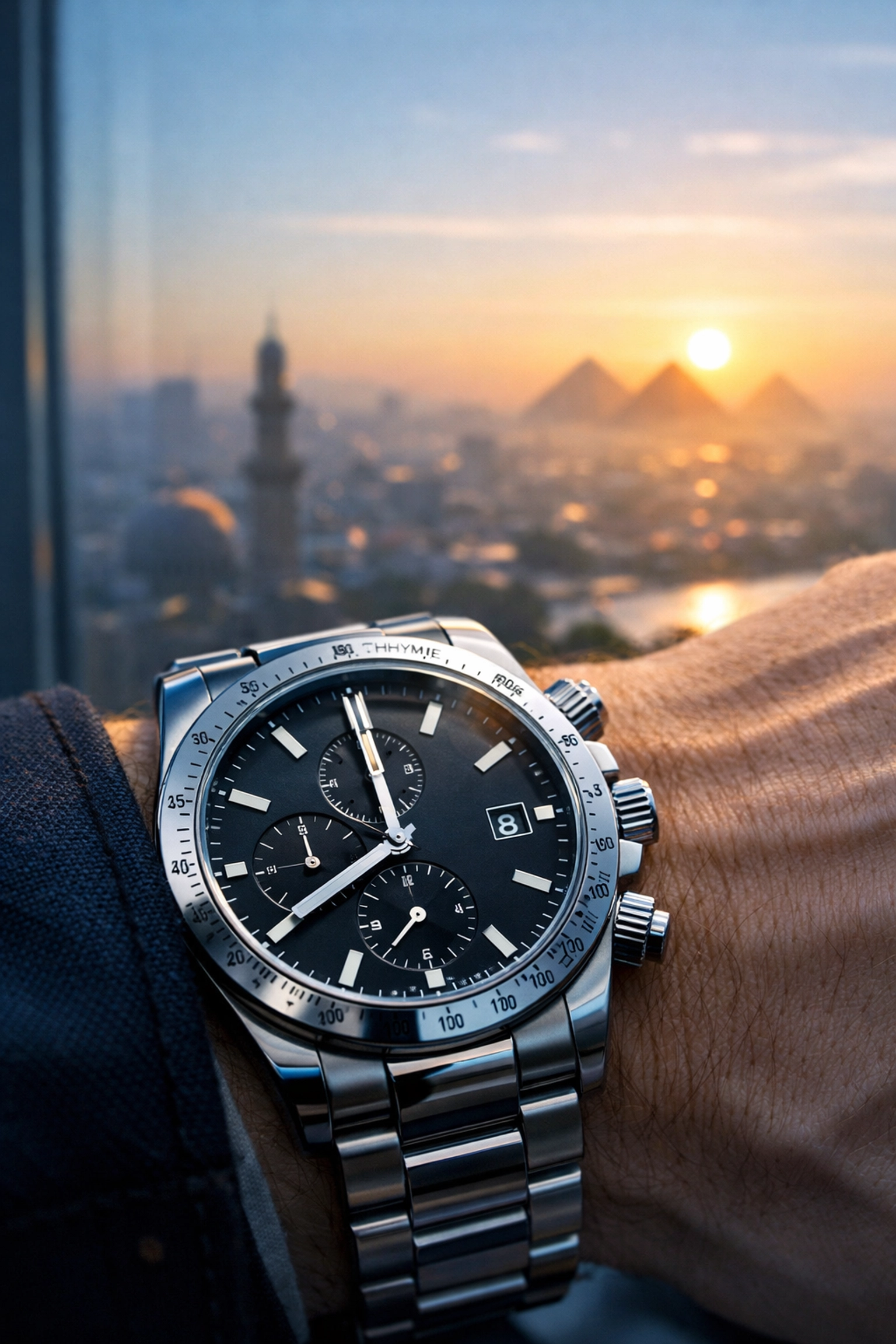
You stand on the balcony of your hotel in Giza, the smell of strong cardamom coffee rising in the morning air. Before you, the Great Pyramid of Khufu cuts a sharp silhouette against a haze of gold and dust. But there is a problem. If you arrive five minutes late, you will face a sea of tour buses. If you miscalculate the offset between your home office and the Egyptian capital, you will miss a critical boardroom presentation.
To master Cairo, you must first master its clock.
The Current Pulse: What Time Is It in Cairo Right Now?
Right now, Cairo operates on Eastern European Time (EET), which is UTC+2. Because you are likely coordinating with teams in London, New York, or Dubai, you must internalize this offset immediately. Cairo is currently seven hours ahead of Eastern Standard Time (EST) and two hours ahead of Greenwich Mean Time (GMT).
However, precision is everything. Mark your calendar for April 24, 2026. On this date, Egypt will transition to Egypt Daylight Time (EEST), shifting the clocks forward to UTC+3. If your trip spans this window, you will adjust your internal rhythm or suffer the consequences of "itinerary frustration."
The Pyramid Strategy: Winning the Giza Plateau
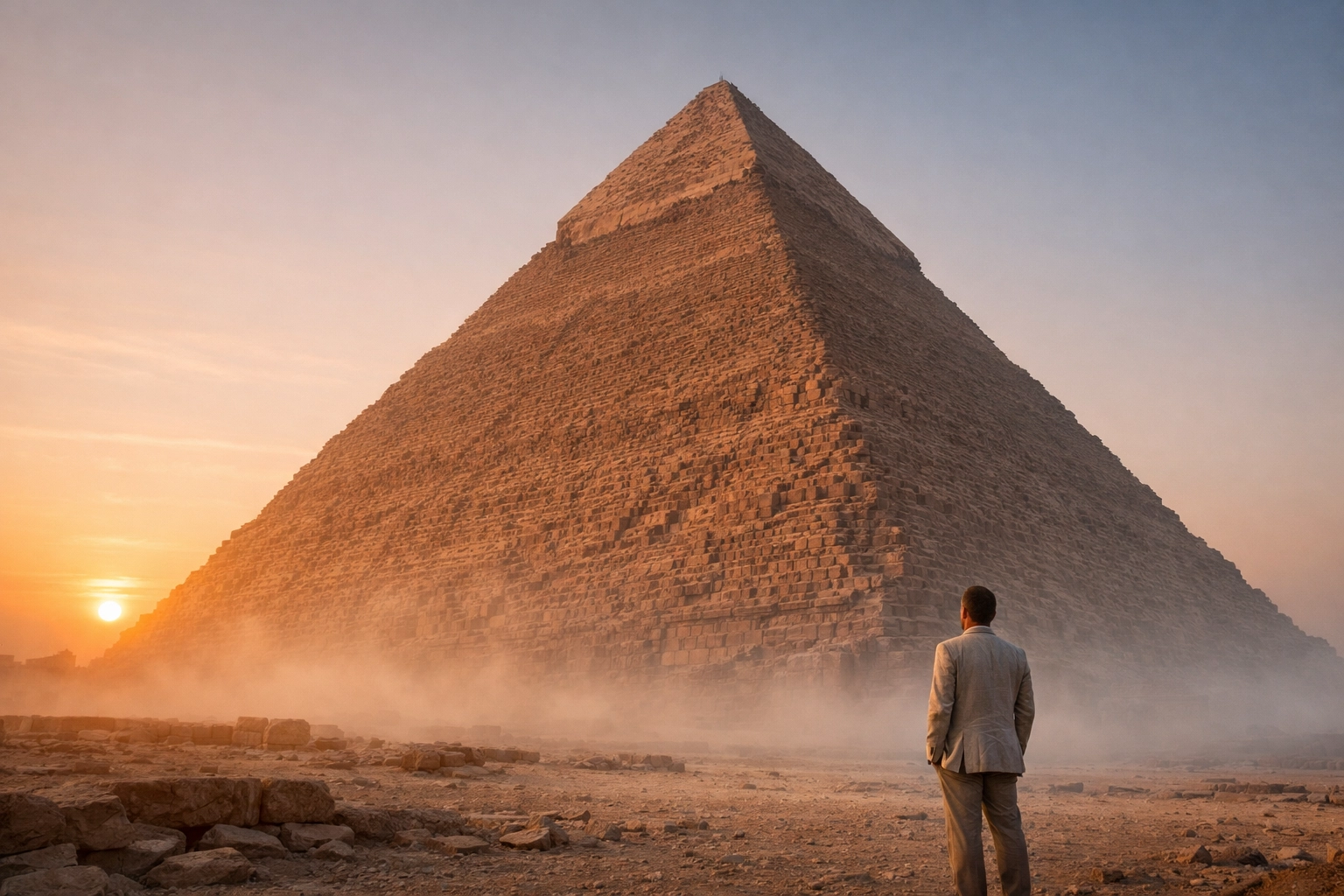
You will not visit the Pyramids at noon. To do so is to invite physical exhaustion and "tourist trap" saturation. The Giza Plateau typically opens its gates at 8:00 AM local time. You will arrive at the ticket office by 7:30 AM.
The Opening Bell Hack:
By being the first through the gate, you will secure ten to fifteen minutes of near-total solitude at the base of the Great Pyramid. This is the only way to experience the scale of the 4,500-year-old limestone blocks without the "neon-slick" distraction of hundreds of smartphone screens.
The High-Noon Retreat:
By 11:00 AM, the sun will become a physical weight. You will retreat. This is the moment you transition from outdoor exploration to the Grand Egyptian Museum (GEM) or the Egyptian Museum in Tahrir Square. These climate-controlled environments are your sanctuary during the peak heat hours.
Logistics for the High-Stakes Traveler
As a frequent business traveler, your biggest enemy in Cairo isn't the heat: it’s the Cairene traffic. Locals call it a "living organism." A trip that takes twenty minutes at 6:00 AM will take ninety minutes at 2:00 PM.
- Prioritize the Metro: If you are moving between Tahrir and Maadi, the metro is your only guarantee of punctuality.
- The "Buffer" Protocol: You will add a 45-minute buffer to every scheduled meeting. Period.
- Friday Logic: In Egypt, Friday is a day of rest and prayer. While many tourist sites remain open, the city’s rhythm changes entirely. You will find the streets eerily empty on Friday mornings: the perfect time to move across the city: but many local businesses will remain shuttered until after the mid-day prayer.
Synchronizing Your Global Workflow
Managing a global team from the banks of the Nile requires clinical precision. Because Cairo sits at the crossroads of Europe, Africa, and the Middle East, you are perfectly positioned to bridge time zones, provided you use the right windows.
- The Morning Window (8:00 AM – 10:00 AM Cairo Time): You will sync with your teams in Tokyo and Singapore. They are wrapping up their day; you are starting yours.
- The Afternoon Bridge (2:00 PM – 4:00 PM Cairo Time): This is your prime "Gold Mine" for European coordination. You are only one hour ahead of Paris and two hours ahead of London or Dublin.
- The Late Night Sprint (6:00 PM – 9:00 PM Cairo Time): This is when the East Coast of the US wakes up. You will conduct your Zoom calls and high-level briefings during your Cairene evening.
If you are planning an onward journey through the region, you must check the specific offsets for nearby hubs. Many travelers find themselves jumping between Istanbul and Cairo, which often share similar offsets but can diverge based on seasonal daylight savings changes.
Cultural Etiquette: The Rhythm of the Evening
In Cairo, the night is when the city truly breathes. You will observe that the "workday" for social life doesn't truly begin until 9:00 PM. If you are invited to a dinner meeting, do not expect food to be served before 10:30 PM.
The Coffee House Ritual:
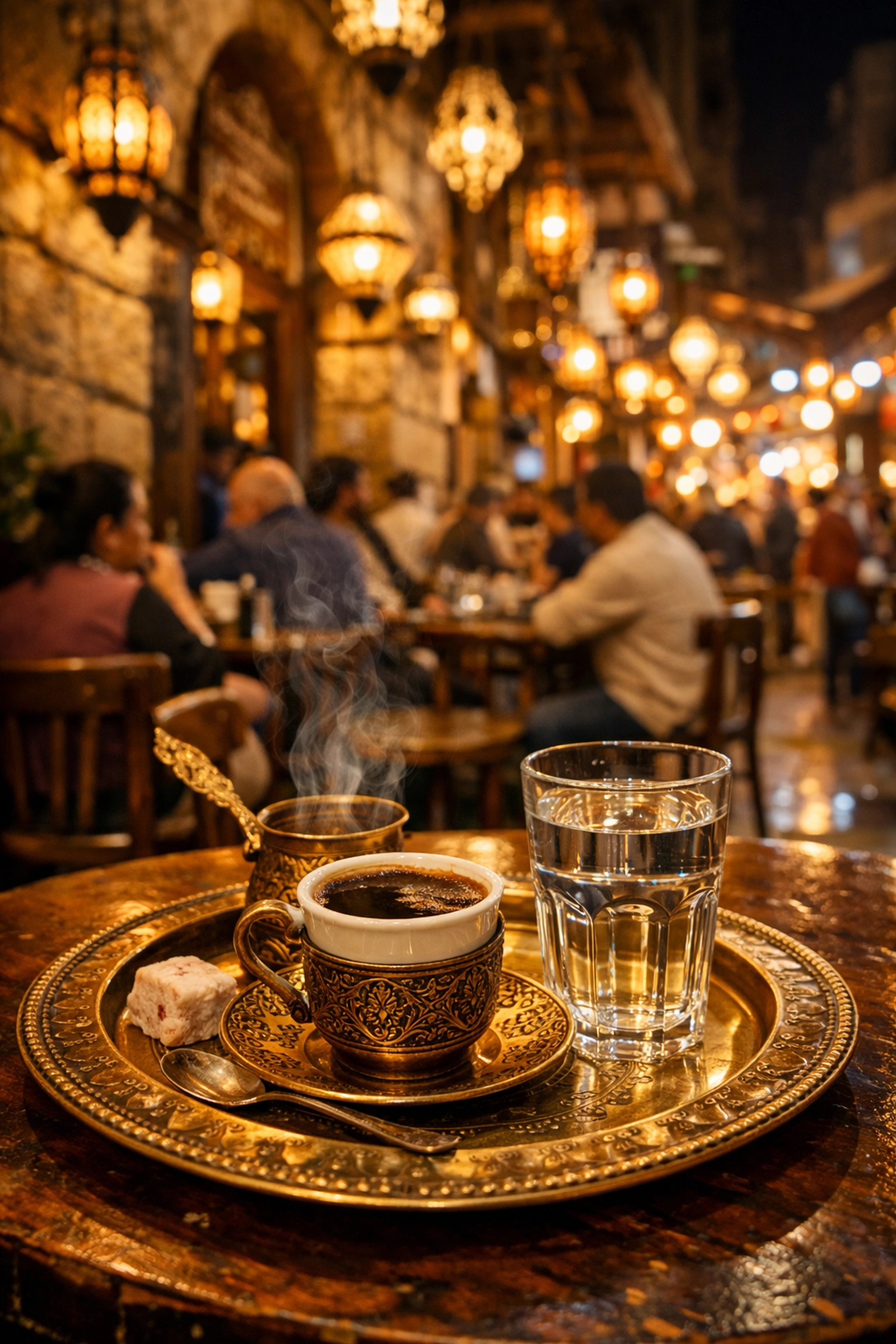
Navigate to a traditional ahwa in Khan el-Khalili. You will order a "mazbout" coffee (medium sugar). Sit with your back to the wall and observe the flow of the market. This is "deliberate travel": the moment you stop rushing and allow the city’s ancient resilience to recalibrate your own internal clock.

Technical Specs: Time Zone Summary for Cairo (2026)
- Current Zone: Eastern European Time (EET).
- Current Offset: UTC +2.
- Next Shift: April 24, 2026, to Egypt Daylight Time (EEST / UTC +3).
- Currency of Time: Punctuality is respected in business, but "Insha'Allah" (God willing) governs the general flow of life. You will be on time; your driver might not be. Resilience is your greatest asset.
Expanding Your Itinerary: Regional Time Checks
Cairo is a gateway. If you are using Egypt as a base to explore the rest of Europe or the Middle East, you must be aware of how the time shifts as you move north. While Cairo remains relatively consistent, Western and Northern Europe engage in more aggressive daylight savings shifts.
Before you book your next flight, ensure you have checked the current status of:
- Brussels for EU administrative meetings.
- Lisbon for the closest European link to the Atlantic time zones.
- Stockholm or Helsinki for Nordic business ventures.
Each of these cities operates on different logic, and a one-hour mistake can lead to a missed connection or a forfeited contract. You will use the Sitemap to verify every leg of your journey.
The Ultimate Cairo Hack: Saqqara Timing
If you want to truly outmaneuver the crowds, you will look beyond Giza. The Necropolis of Saqqara, home to the Step Pyramid of Djoser, is roughly 45 minutes south of central Cairo.
The Strategy:
You will visit Saqqara in the afternoon. While the morning sun is best for Giza, the late-afternoon light (around 3:30 PM) at Saqqara creates long, dramatic shadows across the desert sands. The heat begins to dissipate, and the "labyrinthine" interiors of the tombs feel cooler. You will experience a sense of "serendipity" as you explore the Serapeum with almost no one else around.
Final Briefing for the Cairo-Bound Professional
You will succeed in Cairo by embracing the chaos while maintaining your own rigid schedule. You will prioritize the early morning for monuments, the midday for deep work or museums, and the late evening for networking and cultural immersion.
Your Checklist for Tomorrow:
- Verify the UTC+2 offset against your home office.
- Set your alarm for 6:00 AM to beat the Giza traffic.
- Download an offline map of the Maadi and Zamalek districts.
- Confirm your Friday plans, keeping in mind the 12:00 PM prayer closure.
Cairo is not just a city; it is a marathon of history and energy. By timing your visit with the precision of a Swiss watch, you will extract every ounce of value from the "City of a Thousand Minarets." Trust your preparation. Navigate with confidence. Master the clock. Period.