
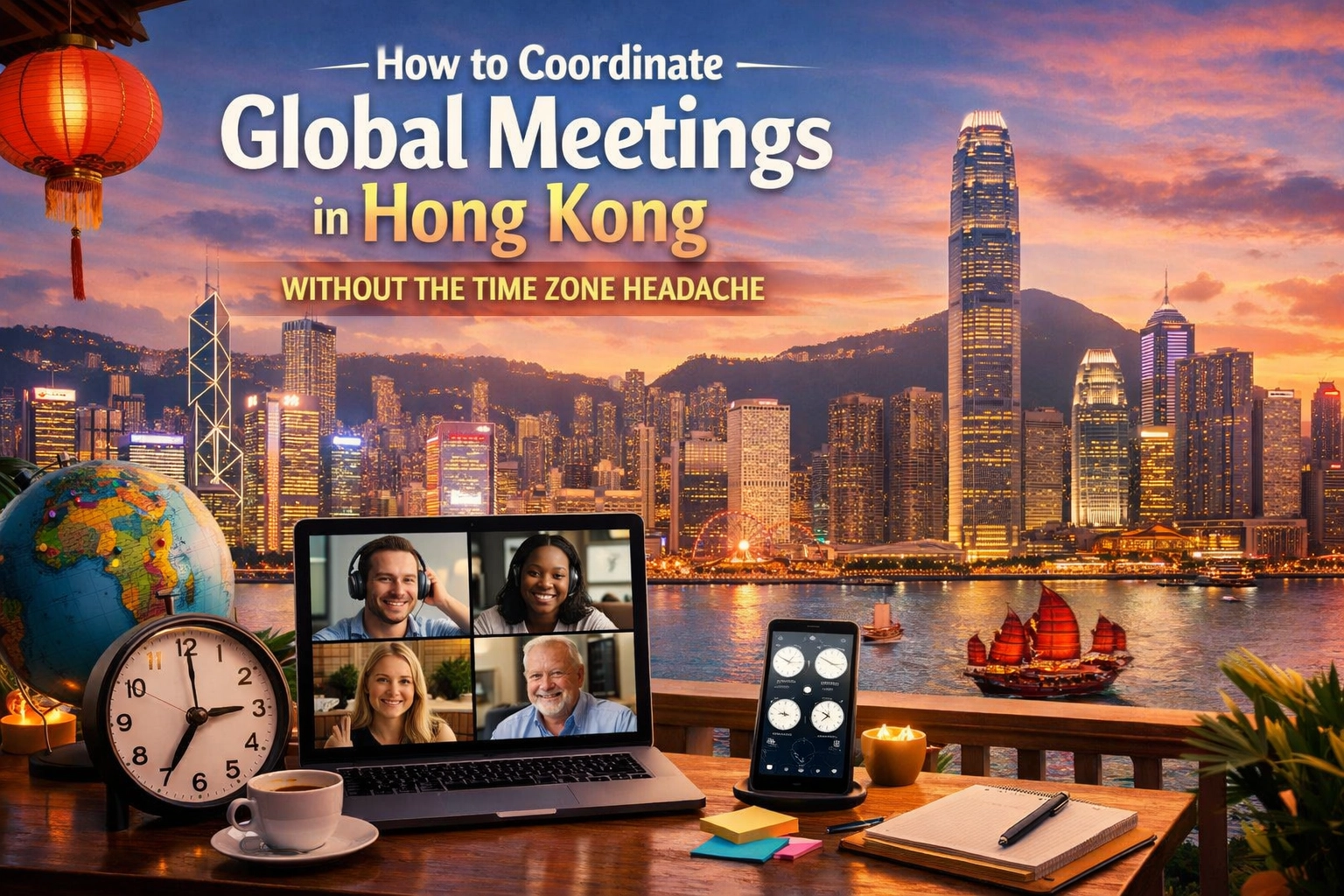
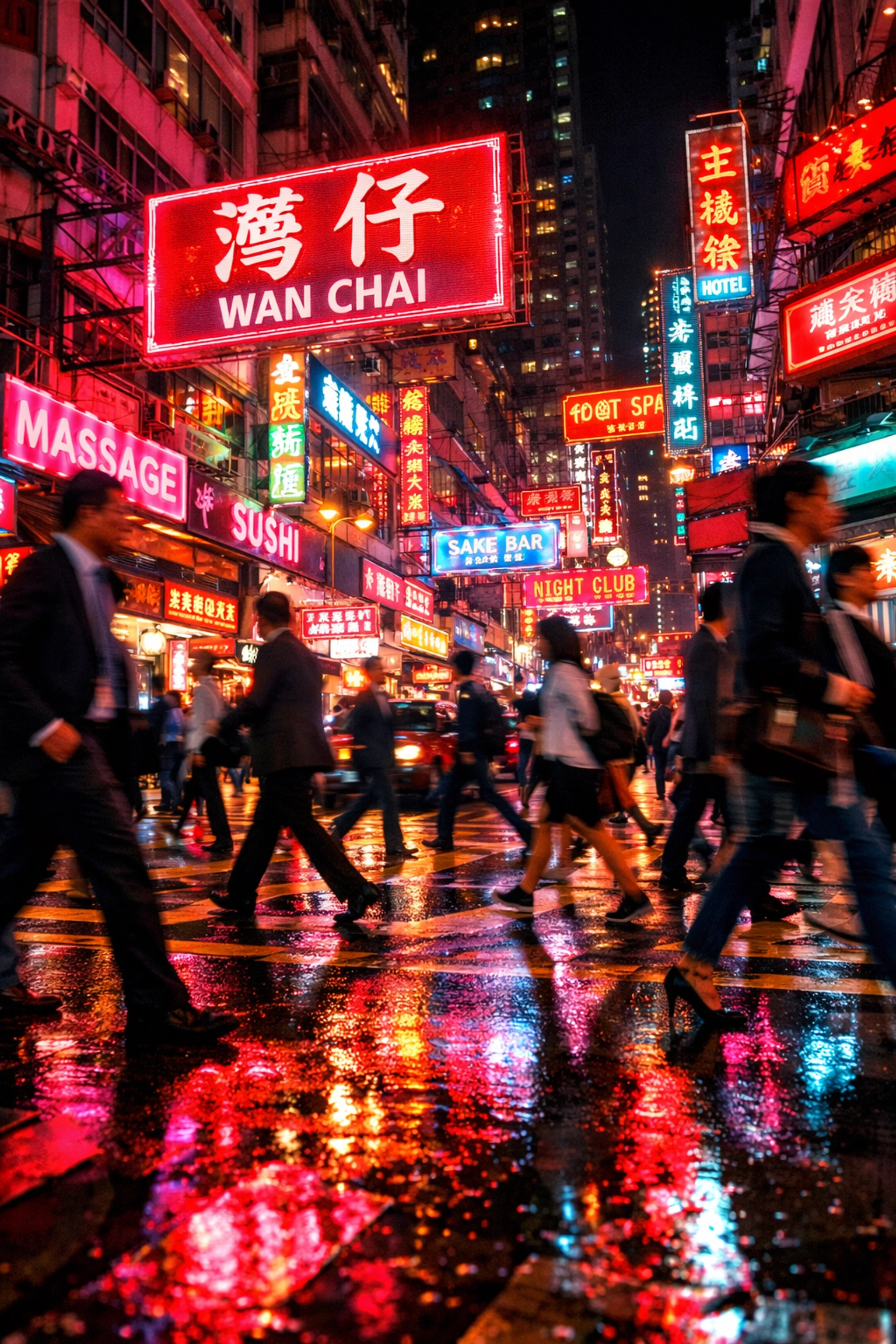
You are standing at the intersection of Hennessy Road, the neon-slick streets of Wan Chai buzzing with a kinetic energy that only Hong Kong can generate. The smell of roasted goose mingles with the steam of a thousand espresso machines. You are in the heart of a global financial titan, a city where seconds represent millions and the clock is the most valuable asset you own. But there is a challenge: your team is scattered across London, New York, and Tokyo.
Navigating the logistical labyrinth of international business requires more than just a calendar app; it requires a strategic mastery of the Hong Kong (HKT) time zone. You will eliminate the friction of scheduling. You will conquer the fatigue of transpacific flights. You will become the expert-insider who moves through time zones with the clinical precision of a Swiss watchmaker.
The Power of the Constant: UTC+8
The first thing you must internalize is that Hong Kong operates on a fixed schedule. Unlike much of the Western world, Hong Kong does not observe Daylight Saving Time (DST). It remains locked in UTC+8 year-round. This is your greatest tactical advantage.
While your colleagues in London or New York are frantically adjusting their clocks twice a year, your anchor in Hong Kong remains immovable. This stability allows you to build permanent scheduling frameworks that won't collapse in March or November.
What time is it in Hong Kong right now? It is exactly eight hours ahead of Coordinated Universal Time (UTC).
Why UTC+8 is the Golden Mean
Hong Kong shares its time zone with major regional players. When you are in Hong Kong, you are perfectly aligned with:
- Beijing & Shanghai: The manufacturing and political heart of China.
- Singapore: The secondary financial hub of Southeast Asia.
- Perth: The resource-rich gate of Western Australia.
- Taipei: The semiconductor powerhouse.
This alignment means your "local" meetings can span the entire East Asian economic corridor without a single minute of time zone conversion. You will achieve a level of regional synergy that is impossible in the fragmented zones of Europe or North America. Period.
Mapping the Global Grid: The Best Time for Global Calls
To run a global operation from the 60th floor of an IFC tower, you must master the "Golden Windows." These are the narrow slivers of time where the world’s major markets overlap. If you miss these, you are relegated to "asynchronous communication": which is a polite way of saying you’re losing time.
The New York Connection (The 13-Hour Gap)
The distance between Hong Kong and New York is the most brutal. During Standard Time, HK is 13 hours ahead.
- The Move: Schedule your high-stakes calls between 7:00 AM and 9:00 AM HKT.
- The Result: You will catch your New York counterparts between 6:00 PM and 8:00 PM their time (the previous evening).
- The Hack: Use the early morning in Hong Kong to close deals while the US is finishing its day. By the time you head to lunch at a dim sum spot in Central, the New York office is asleep, and you have the afternoon to execute.
The London/European Alignment (The 7-8 Hour Gap)
Coordinating with Paris or London is significantly more intuitive.
- The Move: Aim for 3:00 PM to 5:00 PM HKT.
- The Result: This translates to 7:00 AM to 9:00 AM in London.
- The Benefit: You are finishing your workday just as they are beginning theirs. This "hand-off" strategy ensures that the project momentum never stalls. As you step out for a cocktail in Soho, they are picking up the baton.
The Tokyo/Sydney Sprint
Scheduling within the Asia-Pacific region is effortless.
- Tokyo: Japan is only 1 hour ahead of Hong Kong. A 10:00 AM meeting in HK is 11:00 AM in Tokyo.
- Sydney: Australia is usually 2-3 hours ahead.
- The Strategy: Use your mid-day (11:00 AM – 2:00 PM) for regional calls. This leaves your mornings and evenings free for the long-distance "bridge" calls to the West.

Digital Arsenal: The Meeting Scheduler Toolkit
You cannot rely on mental math. One slip-up and you’re waking up a CEO at 3:00 AM. Trust the tools, but verify the settings.
- Dual-Timestamp Logs: If you are in finance or tech, ensure your logs are set to both HKT and UTC. This provides a universal truth that prevents "he said, she said" errors regarding transaction times.
- The World Clock Shortcut: Keep a live reference to global time zones pinned to your browser.
- Calendar Invitations: Always send invites with the time zone explicitly set to "Hong Kong Time." Do not leave it to the recipient's software to "guess" based on your IP address.
Travel and Jet Lag: The Professional’s Protocol
Arriving in Hong Kong from the West involves crossing the International Date Line or traversing a dozen time zones. The resulting jet lag can feel like a physical weight. You will shed this weight by following the Hong Kong Protocol.
The In-Flight Strategy
- Hydration is Non-Negotiable: The dry cabin air is your enemy. Drink 500ml of water for every four hours of flight. Skip the alcohol; the "sky high" martini will cost you two days of productivity.
- The Fasting Hack: Stop eating 12 hours before you want your "new" morning to begin. When you land in Hong Kong, eat a high-protein breakfast at your hotel. This resets your internal "food clock," signaling to your body that the day has begun.
Ground Control
- Light Exposure: If you arrive in the morning, head straight to the Victoria Harbour waterfront. The intense morning sun reflecting off the water will suppress your melatonin production and force your brain into the HKT cycle.
- The 20-Minute Power Nap: If you must rest, do it between 2:00 PM and 3:00 PM. Set a hard alarm for 20 minutes. Do not: under any circumstances: let this turn into a three-hour slumber.

Cultural Time Norms: The Hong Kong Pace
In Hong Kong, time is not just a measurement; it is a mark of respect. The city operates at a breakneck speed, and the cultural expectations around time are rigid and demanding.
Punctuality is Paramount.
In some cultures, "10:00 AM" means "sometime before 10:15." In Hong Kong, "10:00 AM" means you are in the lobby, coffee in hand, at 9:55 AM. Being late is perceived as a lack of professional discipline. You will arrive early. You will be prepared.
The "Always-On" Culture.
Hong Kong is a city of "hustle." It is common to receive WhatsApp messages or emails well into the evening. While you should maintain your boundaries, acknowledging receipt: even with a quick "Received, will review first thing HKT": builds immense trust with local partners. They value responsiveness above all else.
The Power Lunch.
In the West, lunch might be a quick sandwich at the desk. In Hong Kong, the business lunch (often dim sum or a high-end Cantonese spread) is a sacred ritual. However, it is a timed ritual. These lunches are efficient, high-energy, and focused. You will use this time to build the "Guanxi" (relationships) that make the subsequent digital coordination much smoother.
Mastering the "Night Shift" Bridge
Because of the time difference with the US, many Hong Kong-based executives adopt a "split-shift" lifestyle. You might work a standard day, take a break for dinner with family or friends from 7:00 PM to 10:00 PM, and then "re-activate" for an hour at 11:00 PM to align with the opening of the New York markets.
This isn't about working more hours; it's about working smarter hours. By being active when the other side of the world is waking up, you eliminate the 24-hour delay inherent in global email chains. You will achieve "electric energy" by being the person who provides answers while others are still pouring their first cup of coffee.
Summary: Your Hong Kong Time Strategy
- Anchor yourself in UTC+8. It never changes, and neither should your confidence in it.
- Prioritize the Golden Windows. 7:00 AM – 9:00 AM for the US; 3:00 PM – 5:00 PM for Europe.
- Use the Regional Advantage. You are the king of the APAC corridor. Leverage the zero-offset with Singapore and China.
- Master the Jet Lag Protocol. Fast, hydrate, and seek the sun.
- Respect the Punctuality. Show up five minutes early, every time.
Hong Kong is a city that rewards the precise. By mastering the clock, you don't just survive the time zone headache; you turn the very rotation of the earth into a competitive advantage.
Navigate with authority. Prioritize efficiency. Trust the process. Hong Kong is waiting. Period.