The 213 area code location sits in central Los Angeles, California, in the United States, the part of the city that feels like a movie set at golden hour, all glass towers, street tacos, and traffic that never quite forgives you. But here’s the twist: 213 shares the same footprint with overlay codes 323 and 738, so two neighbors on the same block can have different area codes, and both can still be “right.”
An area code is the first three digits of a 10-digit US phone number. It helps the phone network route calls to the right region, and it often signals where a number was first assigned. People look up “213 area code location” because an unknown call pops up, a job lead texts from LA, or a business number needs to look local (and 213 still reads as classic Los Angeles).
It matters for real life stuff. Moving plans, setting up utilities, and choosing a local number for trust all get easier when you know the map. It also helps with missed calls and safety, since area codes can hint at where a number started, even if the caller is traveling or spoofing. Plus, for scheduling calls to this Pacific Time Zone spot, note Daylight Saving 2026 shifts on March 8 2026 to start daylight saving hours and November 1 2026 to switch back to standard time.
Where is the 213 area code location in Los Angeles? (Coverage map in plain English)
If you picture Los Angeles as a giant, sprawling quilt, the 213 area code location is one of the smallest, most iconic patches in the United States. It’s the old heart of the city, the part that feels like LA in bold type, with skyline glass, courthouse stone, and corner taquerias that somehow outshine fancy places.
One catch (and it matters): 213 shares the exact same geographic footprint with 323 and 738. That means your coworker across the hall might have 323, you might have 213, and the new business downstairs might land 738, and you’re all still in the same “central LA” phone zone. For official area code maps, the most reliable starting point is NANPA’s area code maps.
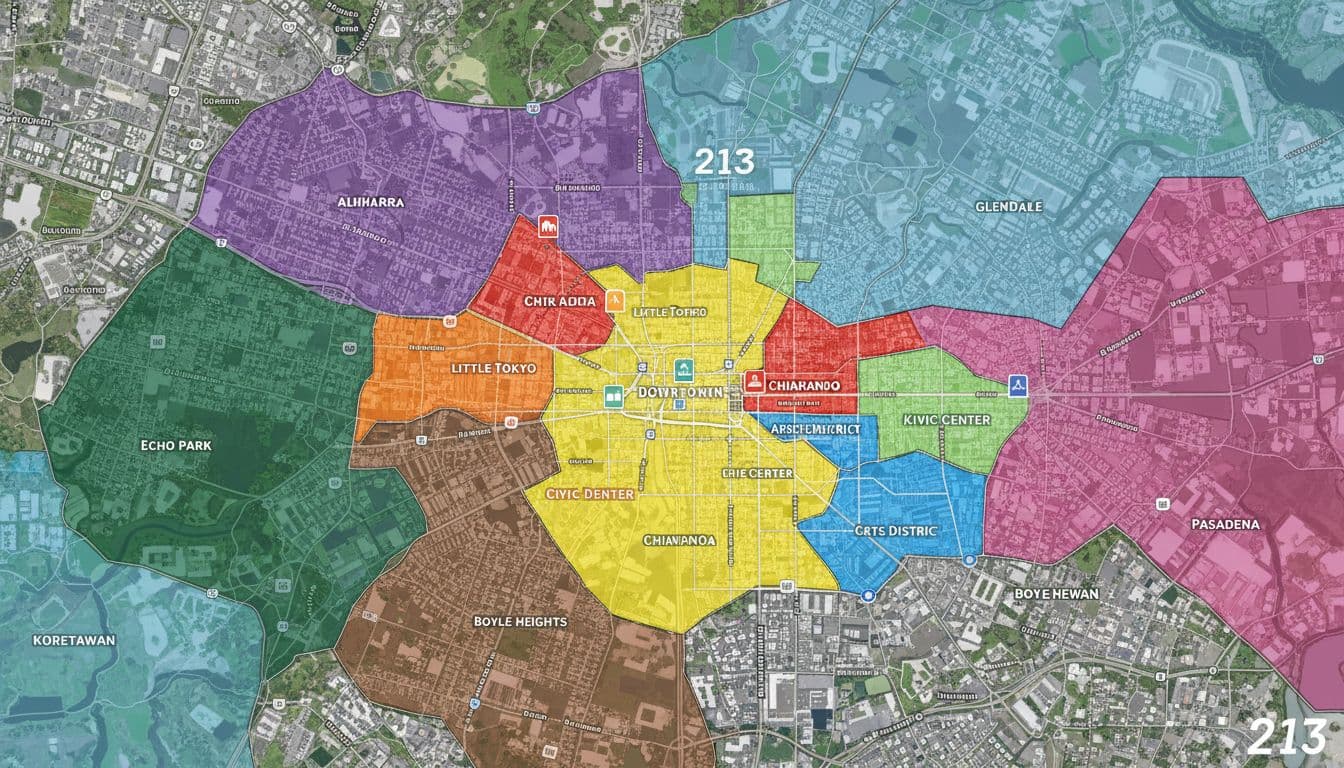
Core area: Downtown Los Angeles and nearby neighborhoods
Think central LA, with Downtown Los Angeles (DTLA) as the bullseye. If you’re trying to form a mental map, imagine a tight cluster around the city’s civic and business center, where the streets feel busier, the buildings go taller, and the natural daylight paints unforgettable golden hour vibes across official addresses.
Well-known places that commonly come up when people talk about 213 include:
- Downtown LA (Financial District, Historic Core, Fashion District)
- Civic Center (courts, government offices, that official, marble-and-echo vibe)
- Little Tokyo (a few blocks that feel like their own small world)
- Chinatown (just north of downtown, close enough to walk)
- Arts District (warehouses turned studios, murals, coffee lines)
Don’t treat this like a street-by-street boundary. Treat it like a “close-in LA” phone identity. It’s the area where a lot of LA’s business addresses, older buildings, and long-held landlines live, which is part of why 213 still feels classic. In a city with such a fast-paced lifestyle, this consistency offers a rare extra hour of sleep vibe amid seasonal shifts.
For a straightforward overview of how the combined region works (213/323/738 in the same footprint), the California Public Utilities Commission’s 213/323/738 page is a solid reference.
Nearby cities that can use 213 (and why that surprises people)
This is where people get thrown off. You’ll see 213 numbers tied to places outside DTLA, including parts of nearby cities across central and southeast LA County. Examples people often recognize include:
Alhambra, Beverly Hills, Glendale, Inglewood, Pasadena, West Hollywood, South Pasadena, Montebello, Monterey Park, Huntington Park, South Gate, Bell, Bell Gardens, Commerce, Cudahy, Maywood, Vernon, Hawthorne, Lynwood, Rosemead.
So why does that happen if 213 “belongs” to downtown?
Because phone numbers are assigned based on carrier inventory, overlays, and when the number was issued, not just where someone lives today. Add in number porting (keeping your number when you switch carriers), and it gets even messier. A person can move from one neighborhood to another and keep the same number, so the area code starts to act more like a “where this line began” hint than a live GPS pin.
Does 213 match specific ZIP codes? What to do instead
Not cleanly. Area codes and ZIP codes are built for different jobs, and they don’t line up in a neat way. The 213 footprint is also small compared to all of LA County, so trying to pin it to ZIP codes usually turns into a spreadsheet headache.
Instead, use methods that follow how phone networks actually route numbers:
- Check the first six digits (NPA-NXX) using a reputable prefix database to see the original rate center or assignment.
- Run a carrier lookup to identify the provider and whether the number was ported.
- Use a reverse phone lookup when you need a practical identity check (especially for unknown calls).
- Confirm with the person or business address when it matters (appointments, invoices, hiring, deliveries), mindful of the time change for business hours and scheduling (unlike Arizona or Hawaii, which skip typical shifts).
If you want a quick, consumer-friendly lookup starting point, AllAreaCodes’ 213 page is handy for basic checks. Just remember the bottom line: 213, 323, and 738 can all be “right” for the same central LA area, so the address is the final proof.
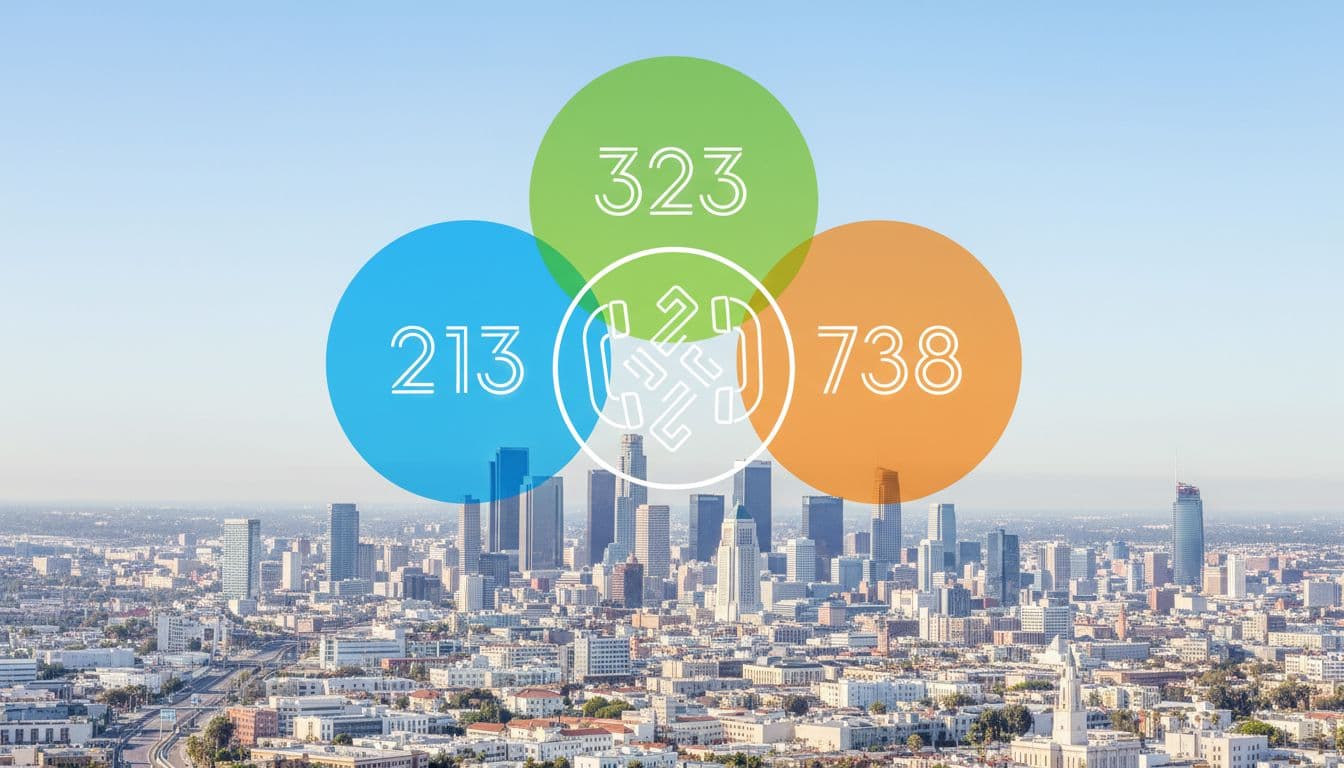
213 vs 323 vs 738: Why the same LA area has multiple area codes
Central LA has a funny way of stacking stories on top of each other. One block can hold a 1920s lobby, a brand-new coffee bar, and a parking garage that feels older than time. Phone numbers work the same way. In the 213 area code location (downtown and nearby), three area codes can sit on the same streets at the same time, and none of them are “wrong.”
What an overlay is, and how it affects your phone number
An overlay means multiple area codes serve the same geographic area. So instead of splitting the map into smaller pieces, the phone system “layers” a new area code on top of the old one. This overlay approach, used across the United States, mirrors the official regulations that govern communication and timing under federal law, such as the Uniform Time Act. In central Los Angeles, 213 overlays with 323, and now 738 also shares that same footprint.
For residents and businesses, this changes how you read a number:
- You can’t pinpoint a neighborhood by area code alone. A 213, 323, or 738 number can all belong to the same part of LA, sometimes the same building.
- Older numbers often keep their original code. If you’ve had a number for years, you usually keep it, even as new codes are added around you.
- New lines can get the newer code. When carriers need fresh inventory for new accounts, extra lines, or new businesses, they may assign the newest overlay code available.
The biggest benefit is stability. Overlays help the region add more phone numbers without forcing people to change existing numbers, which would be a mess for families, medical offices, restaurants, and anyone whose number lives on signs, invoices, and saved contacts. The CPUC explains the 213/323/738 overlay setup on its official page: California Public Utilities Commission 213/323/738 information.
Why 738 was added in 2024 (and what changed for callers)
Los Angeles burns through phone numbers. Between population density, business lines, mobile phones, and all the extra device lines people forget about (tablets, smartwatches, alarms), area codes can run out of available numbers.
That’s why 738 was added as a new overlay on November 1, 2024. The goal was simple: 213 and 323 were running low, so California approved a new code to keep new numbers flowing, without redrawing boundaries or splitting neighborhoods.
What callers need to know is mostly practical:
- Use 10-digit dialing for local calls: area code + 7-digit number.
- Keep short codes short:
911and988still work as 3 digits (same with other service codes).
If you’re updating a contact list or programming any kind of system (office phone menus, alarm panels, speed dial), make sure it accepts 738. It’s not “out of area.” It’s home, just newer.
Is a 213 number “better” than 323 or 738? (Local trust vs reality)
213 has a reputation. It reads like old-school LA, a classic zip of downtown energy, courthouse mornings, late-night diners, and a skyline that looks best after rain. So yes, some businesses want 213 because it feels established. Business hours in central LA could see shifts from legislative pushes like the Sunshine Protection Act, which seeks permanent daylight saving time and steadier daily rhythms without clock changes.
But here’s the reality check: an area code is not proof of trust. It doesn’t confirm a storefront, a business license, or even that the person is currently in LA. With number porting, someone can move across the state (or farther) and keep the same number.
A quick example that happens all the time: three companies share the same DTLA high-rise. One tenant has an older landline and keeps 213. The startup next door set up service later and got 323. The newest suite down the hall signs a lease after the latest rollout and gets 738. Same address, same elevator, three different area codes.
If you’re judging whether a caller is truly local, treat the area code as a vibe, not a guarantee. Confirm with an address, a website, and basic due diligence, especially when money, contracts, or personal info are involved. For a quick background overview of the three codes sharing one region, see: Area codes 213, 323, and 738.
A quick history of the 213 area code (why it is iconic in LA)
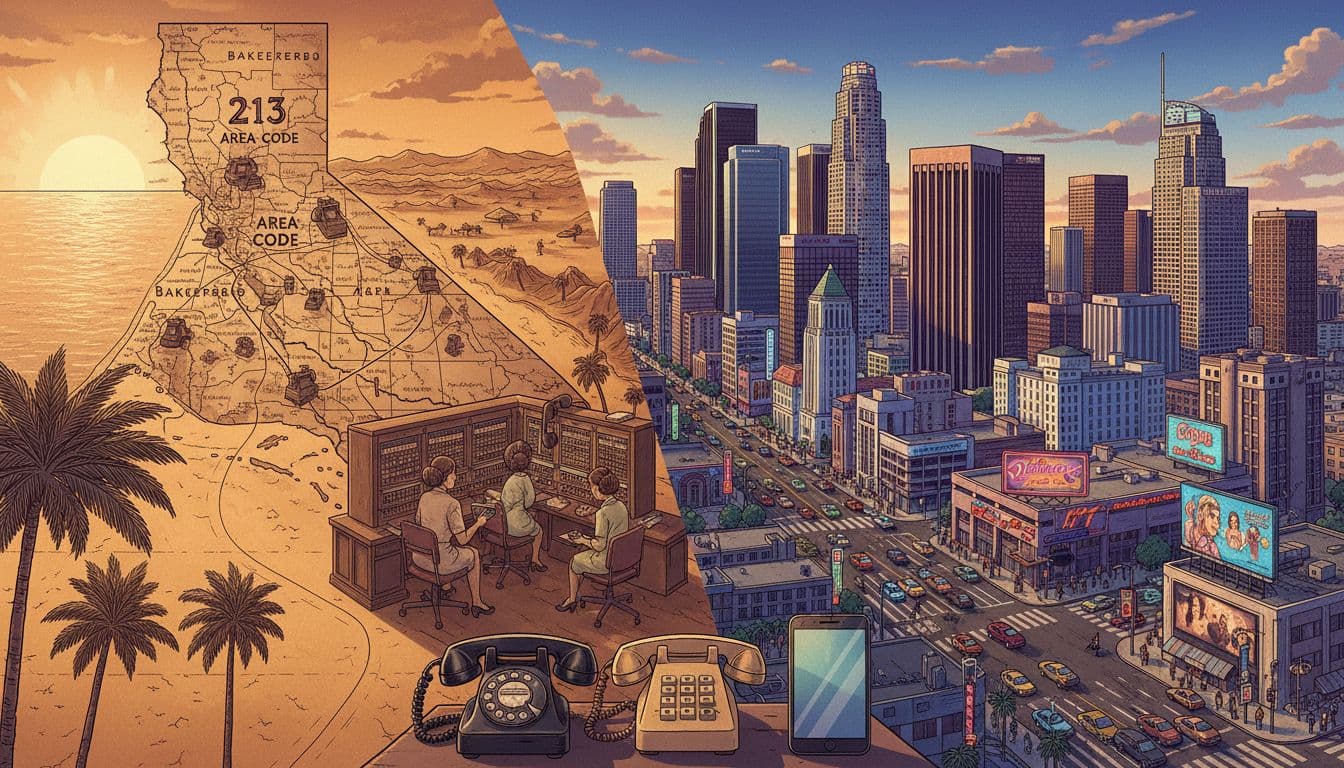
The 213 area code location feels like Los Angeles in its most concentrated form, the part of the city where old money, new ambition, and government marble all share the same sidewalks. But 213 did not start small. It started huge, then got carved down again and again as Southern California filled up with people, businesses, and phones of every kind. This evolution mirrors the history of time regulations in the US, where Daylight Saving Time began during World War I for energy conservation, with clock changes at 2:00 a.m. and modern schedules established by the Energy Policy Act of 2005. Unlike Hawaii, which maintains a fixed time, LA’s central core experiences these shifts, highlighted by the winter solstice’s short days in Downtown.
From “all of Los Angeles” to a small central core
Back in the beginning, 213 was basically the wide shot. When it launched in 1947 (as one of the original NANP area codes), it covered all of Los Angeles County and a huge stretch of Southern California. At the time, that made sense. Fewer households had multiple lines, and “a phone” was a shared object, not a personal accessory that lived in your pocket.
Then LA did what LA does. It grew, spread, densified, and multiplied. More residents, more offices, more fax machines (remember those?), more mobile phones, more tablets, more connected devices, more everything. The supply of available numbers inside 213 started to feel like parking in DTLA at 6 p.m., crowded and getting worse.
So the phone map changed in two big ways:
- Splits: parts of the old 213 territory were cut off and given new area codes, so the remaining 213 could keep functioning.
- Overlays: instead of cutting the map again, a new area code got layered over the same geography, so new lines could be added without forcing people to change their number.
That’s why today the 213 footprint is a small slice of Los Angeles County, mostly tied to central LA, compared to its original reach. For a deeper reference map and history, this overview of area codes 213, 323, and 738 lays out the big changes.
Key timeline milestones people still talk about
People remember 213’s history because it tracks LA’s growth like rings in a tree trunk. Here are the headline moments, in plain language:
- 1947: 213 is created as one of the original US area codes.
- 1950: A major early split creates 310, trimming the original 213 region (people still name-drop this split because it marked the start of 213 shrinking).
- 1990s: More changes roll in as demand spikes across Southern California, and 213 keeps getting tighter around the city’s center.
- 2017: The old boundary lines between 213 and 323 are removed, and the region becomes an overlay, meaning both codes serve the same central LA footprint.
- 2024: 738 arrives as a new overlay for the same 213/323 region, adding more number supply without changing anyone’s existing digits (covered in this Los Angeles Times piece on 738).
If you live here, the takeaway is simple: the map kept changing because LA kept asking for more lines than one area code could hold.
Why Downtown LA is tied to 213’s identity
Even with overlays and number portability, 213 still reads as “central LA” in people’s heads. It’s the code you associate with the older business districts, courthouse corridors, legacy institutions, and the kind of addresses that look good on a letterhead.
That’s why you see 213 show up in:
- Branding (restaurants, labels, bars, creative studios)
- Culture (lyrics, merch, neighborhood pride)
- Business identity (a way to signal “we’re really here”)
But here’s the honest part: numbers move with people now. You can grab a number, port it, keep it through moves, and carry it like a passport stamp from a past life. So 213 can be a vibe, and it can be real, but it’s not proof on its own. Treat it like a strong hint, then verify with an address when it matters.
How to check if a 213 number is really from the 213 area code location (and avoid common traps)
A 213 number can feel like a postcard from the center of Los Angeles, all DTLA towers and busy sidewalks. But a phone number is not a GPS pin. Between number portability and caller ID spoofing, the 213 area code location can signal where a number started, not where the person is right now, or even who they are.
Use the area code as a clue, then verify with a few calm, practical checks (think springing forward with the initial hunch, then falling back to confirm), especially when the call involves money, a job offer, or a delivery problem.
Number portability: the person may not be in Los Angeles anymore
Cell numbers travel. So do many VoIP numbers. Someone can pick up a 213 line in central LA, then keep it for years while their life moves on.
Common, totally normal examples:
- Moving for school: A student gets a 213 number while living near Downtown LA, then heads to San Diego, the Bay Area, or out of state, and keeps the same number.
- Moving for work: A new job relocates someone to Phoenix or Seattle (or even Arizona, where location verification gets tricky since Arizona skips daylight saving time while the Navajo Nation within it observes it), but their old LA number stays because it’s on every account and contact list.
- Virtual business lines: A small business wants a local look, so they buy a 213 virtual number that rings on a phone anywhere, even if the owner lives outside LA County.
Porting is a real feature, not a loophole. The FCC explains how keeping your number works when you change providers in its guide to porting a phone number. The takeaway is simple: a 213 number can be legit and still not be in Los Angeles, just like clocks forward in spring without a full resetting of clocks to match new realities.
Caller ID spoofing: why the area code alone cannot prove identity
Spoofing is when a caller makes a fake number show up on your screen. It can look local. It can look familiar. It can even look like a real company. That’s the point. Automated systems often strike at odd hours, like 2:00 a.m., when defenses are down.
So if someone calls from “213” and claims they’re your bank, a delivery company, or a recruiter, treat the number like a mask at a costume party. Fun to look at, not proof of who’s underneath.
A few safe habits that stop most problems before they start:
- Don’t share one-time codes, account logins, or passwords from an incoming call, even if the caller sounds professional.
- Don’t pay from pressure, especially if they demand gift cards, crypto, or “urgent” wire transfers.
- Call back using an official number you find yourself, like the one on a statement, the back of a card, or the company’s official site, not the number that called you.
For a plain-English overview, the FCC’s page on caller ID spoofing is worth skimming once so you know the basics.
Simple ways to verify a 213 caller or business
If the call could affect your wallet, your identity, or your time, run a quick reality check. It takes a minute, and it often reveals the truth fast. Legit business calls tend to follow the circadian rhythm of standard hours, so timing is another clue.
Use this checklist:
- Search the number in quotes, like
"2135550123"(or"213-555-0123"). Quotes help you find exact matches. - Look for a matching business website that lists the same number, plus a real address and working email.
- Check the Maps listing and compare it to the site. Do the name, phone, and address match, or does it feel stitched together?
- Confirm the address with Street View if relevant (a real office, not a random house or empty lot).
- Check business registration if needed. For California entities, use the California Secretary of State business search to see if the name is on file.
- Ask for an invoice or written estimate you can review. Legit businesses can send paperwork without drama.
One important note: reverse lookup tools can be incomplete. Some numbers won’t show much, and some listings are outdated. Treat reverse lookup as one sign, not the whole verdict.
When to answer, when to ignore, and when to block
You don’t have to treat every 213 call like a threat. Just use simple rules.
Answer (or call back via an official number) when:
- You’re expecting a call from LA (job interview, appointment, delivery).
- They leave a clear voicemail with details you can verify.
Ignore or screen when:
- It’s an unknown number and no voicemail appears.
- You get repeated short calls that hang up fast.
- The story keeps changing, or they won’t give a callback extension.
Block and report when:
- They pressure you to pay fast.
- They ask for gift cards, crypto, or unusual payment methods.
- They use threats (arrest, lawsuits, deportation, “your account is frozen”).
On iPhone, you can block a caller from the Phone app’s recent calls list, and you can also turn on Silence Unknown Callers to send unfamiliar numbers to voicemail. On Android, you can block from the Phone app and use Caller ID and spam protection (wording varies by device) to flag suspected spam automatically.
The goal is calm control. Let a real 213 caller prove they’re real, then move forward on your terms.
Conclusion
The 213 area code location still points to central Los Angeles in the United States, with Downtown LA as the familiar center of gravity, all high-rises, murals, courthouse corridors, and late-night food that tastes better than it should. But the modern map is layered, not clean, because 213 shares the same exact region with 323 (overlay since 2017) and 738 (added in late 2024), so different codes can live on the same block and still be truly local.
That also means an area code is a hint, not a tracking chip. People move, numbers get ported, and caller ID can be faked, so a 213 number doesn’t guarantee the caller is in LA today. When verifying calls, note the time change too, as this region follows daylight saving time from the second Sunday in March, such as Sunday March 8 (March 8 2026), to the first Sunday in November (November 1 2026), before switching back to standard time. The Department of Transportation governs these shifts across the United States, though rules differ in US territories, with standard time applying outside DST periods.
If an unknown 213 caller asks for money or personal info, pause and verify by calling back using a number you find on the company’s official site (not the one that rang you). Thanks for reading, and keep your phone on your terms.