
Rain can feel like a clock with a mind of its own, ticking closer on some hidden schedule you’re supposed to guess. You step outside, scan the clouds, check an app, and still wonder—do you really know how much time you’ve got before the sky opens? You don’t need special gear or secret knowledge, just a clearer way of noticing what’s already there, and that’s exactly where we’ll go next.
Key Takeaways
- Check an hourly forecast in your weather app; combine each hour’s rain chance with predicted intensity to spot likely wet periods.
- Use radar to see approaching showers; watch echoes’ movement toward your location to estimate arrival within 5–120 minutes.
- For light green radar returns (20–30 dBZ), expect mist or drizzle soon; stronger colors (30–45+ dBZ) indicate steadier or heavier rain.
- Observe the sky: towering cauliflower clouds or darkening, lowering virga usually signal showers or storms within roughly an hour.
- Enable minute‑by‑minute rain alerts (e.g., Apple Weather, AccuWeather, RainViewer) for specific “rain starting in X minutes” notifications.
Reading Hourly Forecasts for Precise Rain Timing
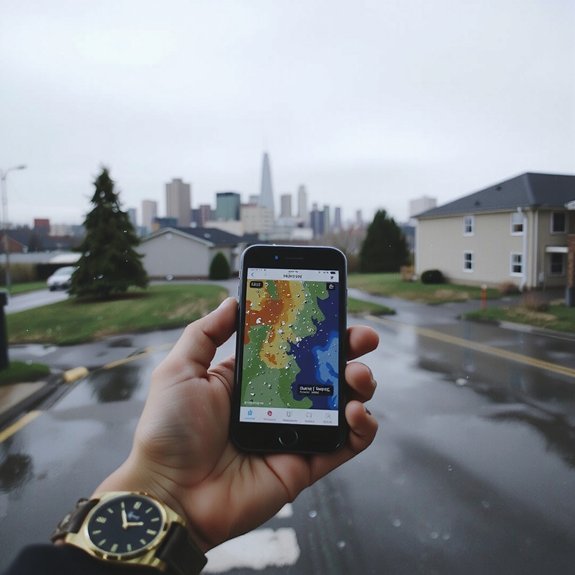
How do you turn a simple hourly forecast into a clear picture of when raindrops will actually start to fall on your street, your skin, your plans?
You begin by treating that row of numbers like a story, not a guess. Look at the precip probability for each hour, then pair it with the forecasted rate of rainfall, using intensity thresholds to decide whether you’ll feel only a mist on your face or hear steady drops on your windowsill. A 70% chance with light amounts suggests passing drizzle, while the same chance with higher rates points to real, measurable rain.
Next, lean on high‑resolution short‑range models, which can sharpen timing within a few hours, yet still carry model uncertainty you must respect. Notice phrases like “likely between 2–4 PM,” and translate them into a personal window—when you’ll walk the dog, leave work, or pause and welcome the weather.
Using Weather Radar to Track Approaching Showers

Why not think of weather radar as a kind of distant window, letting you see the rain before you ever feel it on your skin?
When you open your favorite radar app, you’re not just staring at colors on a map—you’re reading a quiet story about what’s coming toward you, and how soon you’ll hear it on the roof.
Radar turns distant storms into a quiet forecast, long before raindrops find your roof
Start with simple dBZ interpretation, letting the numbers anchor your sense of scale: 20–30 dBZ hints at light, misty showers, 30–40 dBZ signals steady rain, and anything above 45 dBZ warns of heavy, drumming bursts.
Then, treat each new radar frame like a page in a flipbook, watching echoes slide across your town.
- Measure distance from the echo to you.
- Estimate speed, then divide distance by that speed.
- Recheck trends, remembering beam overshoot and terrain can hide cells, so trust patterns, not a single frame.
Key Sky and Wind Clues That Rain Is Near
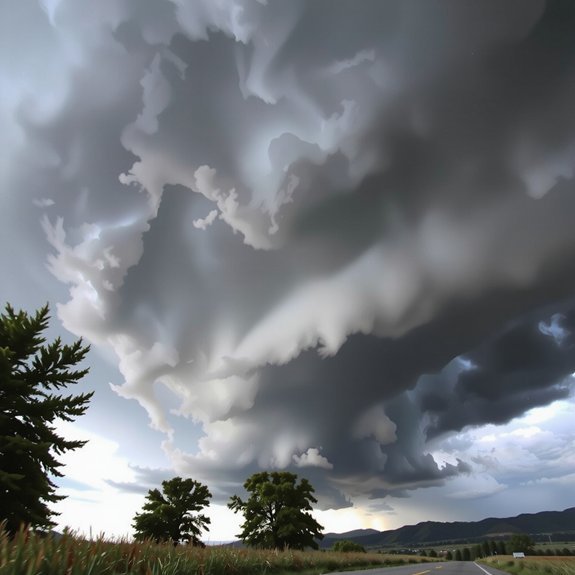
Sometimes the surest signs of coming rain aren’t on a screen at all—they’re written across the sky and whispered through the wind right where you stand. When you look up with real presence, you start to notice a quiet cloud progression: wispy cirrus thickening to a milky veil, then to higher gray sheets, then to a low, solid blanket that feels heavy on your shoulders—steady rain is often 12 to 24 hours away.
Other times, puffy clouds shoot upward into tall towers, dark and cauliflower‑shaped, and you know showers or storms may arrive within the hour. Watch the horizon for subtle virga indicators, those gray streaks falling but fading before they hit the ground; as they grow darker and lower, your turn for rain is close.
Feel the wind, too—freshening from the south, then suddenly gusty—a hidden front rushing your way. Breathe, notice, prepare with calm focus, gratitude.
Best Weather Apps for Minute‑by‑Minute Rain Alerts
Rain doesn’t only speak through clouds and wind—it also hums through your phone, a quiet buzz in your pocket that says, “Rain starts in 7 minutes, lasting 20.”
Once you’ve tuned your eyes and skin to the sky’s own signals, pairing that awareness with smart weather apps gives you a kind of double vision, a blend of presence and precision that can change how you plan your days.
On iOS, Apple Weather shows next‑hour rain, minute by minute.
Here are three companions when you want minute‑by‑minute alerts, not guesses:
- AccuWeather with MinuteCast, giving 120‑minute rain odds, intensity bars, and flexible alerts, though premium tiers add Subscription Costs.
- Weather Underground, layering radar with nearby personal stations, helpful if your neighborhood’s conditions often surprise you.
- RainViewer and CARROT Weather, using radar nowcasts and notifications—study their Privacy Policies, tune alerts to serve you, not rule you.
Tips to Plan Your Day Around Expected Rainfall
Even before the first drop darkens the sidewalk, you can shape your day around the rain instead of letting it surprise you.
Start by scanning the hourly forecast with a calm, curious mind—when the chance jumps past 30% and keeps rising, treat it as a soft alarm, a signal that light showers may arrive within the next couple hours. Look closely at intensity; if it moves into moderate territory, choose shelter or reschedule, because you’ll feel soaked within minutes.
Build simple Clothing Strategies: breathable layers, a hooded jacket, shoes you don’t mind getting wet, a small umbrella tucked in your bag on low‑chance days.
Plan Transport Alternatives, too—leave earlier for the bus, budget time for slower driving, or switch to a video meeting instead of a rushed commute.
As you practice, notice the quiet confidence that grows whenever rain appears on the horizon, and you feel ready again.
Frequently Asked Questions
How Reliable Are Long‑Range Rain Predictions Several Weeks or Months in Advance?
They’re only partly reliable—you can treat long‑range rain outlooks as gentle guidance, not a promise.
You lean on Seasonal skill and Ensemble forecasts to see patterns, like wetter‑than‑normal months, yet day‑to‑day storms stay unpredictable.
Can Climate Change Affect the Usual Time of Day It Tends to Rain?
Yes, climate change can shift the usual time of day it rains—imagine checking a sundial app and noticing storms now form later than they used to.
Warmer nights and altered Diurnal Shift patterns can push afternoon showers into evening, changing light, sound, and mood.
As the Jet Stream wobbles, storm paths and timing adjust, so you stay curious, watch the sky, and meet each new rhythm with presence and gratitude.
Why Do Different Weather Apps Give Different Rain Times for the Same Location?
You see different rain times because each app reads the sky through its own lens, using different weather models, data sources, and assumptions.
One may rely on high Model Resolution, another on faster Update Frequency, so their forecasts don’t always match.
Trust this as a reminder to stay flexible—step outside, feel the wind, watch the clouds.
Let your own presence join the forecast with quiet authenticity, gratitude and courage.
How Does Local Geography (Hills, Lakes, Cities) Change Expected Rain Timing?
Local geography shifts rain timing because it quietly redirects air.
Near water, a lake breeze can pull storms toward shore sooner, or hold them offshore longer, so you learn to watch the boundary like a living edge.
Hills and mountains trigger orographic lift, squeezing moisture into earlier showers.
Cities add heat, nudging clouds to form or split.
Notice these patterns, stay curious, and trust your growing weather instincts each day.
What Factors Cause Forecasted Rain to Be Delayed or Not Arrive at All?
Sometimes the promised rain vanishes like a magician swallowing the entire sky, because key ingredients quietly change. You might get Dry Air sliding in above you, eating raindrops before they reach the ground, or shifting Wind Shear tearing storms apart. Slight track changes, fading instability, or new nearby storms can steal your moisture, yet you can’t control everything,
so practice patience, gratitude, calm presence, and hopeful authenticity in each delay.
Conclusion
When you check the hourly forecast, scan the radar, and glance at the sky, you’re not just timing rain — you’re practicing presence. Picture a parent waiting at a bus stop, umbrella ready, kids laughing as the first drops tap the pavement like a soft drumroll. Do the same: trust your tools, notice the wind, adjust your plans with calm intention, and let every storm remind you how prepared, resilient, and deeply alive you really are.


