
Say you’re texting a friend in Los Angeles before lunch: you want to know if it’s too early to call. Right now in California it’s 9:55 AM, Saturday, December 27, 2025—Pacific Standard Time, UTC−08:00—so folks are just getting going after sunrise around 7:10. If your phone’s on America/Los_Angeles you’re set, though clocks jump an hour on March 8, 2026. Here’s the simple way to keep it straight.
Current Local Time in California
Right now, it’s 9:55:54 AM in California on Saturday, December 27, 2025, and the state’s running on Pacific Standard Time (PST, UTC−08:00), which just means you’re eight hours behind UTC and there’s no funny business with extra daylight. Morning’s in gear, so coffee shops are humming, buses are steady, and Office schedules are settling in after the first rush. You’ve got clear daylight ahead, which helps you line up errands, calls, and a late lunch that doesn’t feel rushed. Since Daylight Saving Time ended back on November 2, you’re on plain clock time, no shift to chase. That means planning is simple for Evening entertainment, too, because sunset comes earlier and downtown parking opens sooner. If you need a technical tag, think America/Los_Angeles today.
Time Zone and UTC Offset
Now that you’ve got the local clock in hand, here’s the label behind it: California runs on Pacific Time, and the system name you’ll want is America/Los_Angeles. In plain terms, you’re looking at UTC−08:00 when it’s standard time, called Pacific Standard Time, and UTC−07:00 when clocks shift to Pacific Daylight Time. That one‑hour swing can nudge California closer to or farther from other countries for a bit, so calls and flights sometimes feel off by an extra hour. The historical evolution is simple enough: railroads, radios, and then computers pushed folks to agree on one zone, so work and trade didn’t tangle. The political implications persist, since any tweak touches schools, commutes, and power use. For tech setups, always choose America/Los_Angeles on every device.
Daylight Saving Time Schedule
You wrapped up DST for 2025 on Sunday, November 2, setting clocks back from 2:00 to 1:00 and settling into Pacific Standard Time at UTC−8. Next up, you’ll spring forward on Sunday, March 8, 2026, when 2:00 jumps to 3:00 and California shifts to Pacific Daylight Time at UTC−7. Mark it in your phone under America/Los_Angeles so the time updates on its own, saving you a headache and at least one missed breakfast.
2025 DST Dates
While it sneaks up twice a year, California’s DST schedule is plain once you see the dates: clocks sprang forward on Sunday, March 9, 2025 at 2:00 a.m., jumping to Pacific Daylight Time (UTC−7), and you stayed on that faster clock until Sunday, November 2, 2025 at 2:00 a.m., when they fell back an hour to Pacific Standard Time (UTC−8) and left you with earlier sunsets and a little more morning light. Here are five dates to keep straight, with Legislative History and Public Opinion riding shotgun but not steering: Mar 9, 2025—the jump; Mar 10—the first workday wake‑up; Jun 21—the long, bright solstice; Nov 1—the set‑a‑reminder night; Nov 2, 2:00 a.m.—the click back to PST. Simple dates, steady plan, fewer surprises, really.
Next Change March 2026
After the 2025 clock shuffle, attention turns to the next spring switch in California, which lands on Sunday, March 8, 2026, when the clocks jump at 2:00 a.m. straight to 3:00 a.m. and the state trades Pacific Standard Time (UTC−8) for Pacific Daylight Time (UTC−7).
You lose an hour before dawn, so plan your bedtime and your Sunday shift like you mean it. Your phone and laptop should update on their own, and America/Los_Angeles will show the change, but double-check ovens, coffee makers, and the truck dash. Legislative Updates pop up now and then, yet until laws change, you still spring forward. Watch the Health Effects: darker mornings can fog your head and bump accident risk, so grab light, hydrate, and ease into starts.
Sunrise, Sunset, and Day Length
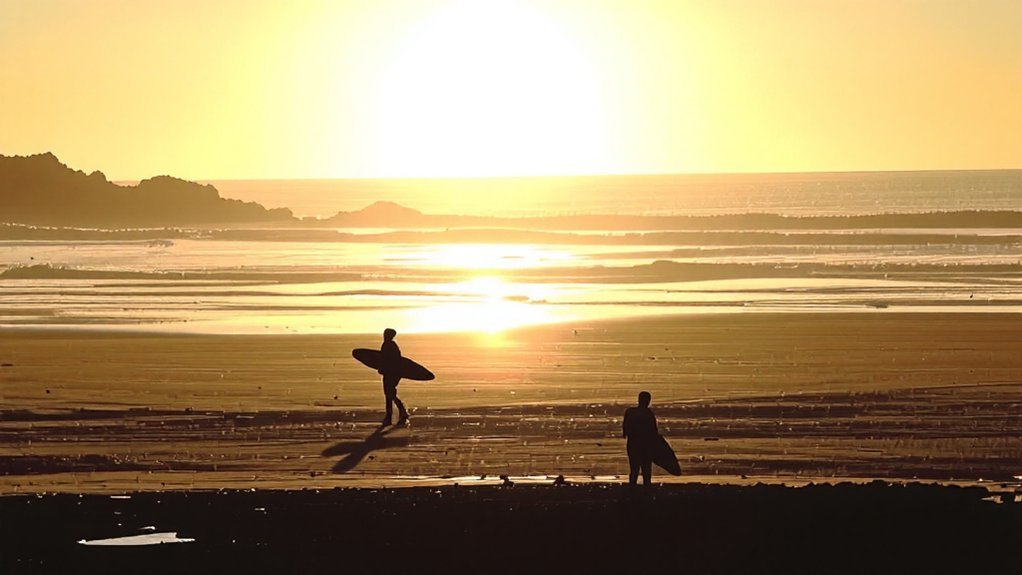
You’ll see the sun pop up at 7:10 AM and slip away at 4:50 PM, giving you about 9 hours and 40 minutes of light, which is a pretty short winter stretch. Around 11:54 AM the sun hits its high point, only about 32.7° up, so your shadow still runs long even at lunch. Days are short now but they’ll inch longer week by week, so you plan errands early and save the slow chores for after sunset, a small tweak that keeps you a step ahead.
Today’s Sunrise and Sunset
This morning in California, the sun slips up at 7:10 AM and calls it a day at 4:50 PM, giving you 9 hours and 40 minutes of honest daylight to stack your plans, from the first coffee to the late-afternoon pickup that always seems to land right as the light fades. By late morning, solar noon hits about 11:54 AM, with the sun only near 32.7°, so shadows stay long. For photography tips, work sunrise for wide, clean lines; save sunset for tight, warm color. Local folklore says a pink dawn points to gentler seas.
- Sip coffee by 7, face east, watch the glow rise.
- Aim errands midmorning for softer light and steadier warmth.
- Set a 4:30 alarm, beat dusk traffic, catch curbside gold.
Changing Day Length
Though the days still feel short, California has already turned the corner toward more light, and you can see it on the clock if you watch it a week or two. Today, the sun rises at 7:10 AM and sets at 4:50 PM, giving you 9 hours 40 minutes of daylight, with civil twilight stretching usable light from 6:29 AM to 5:19 PM. Solar noon lands near 11:54 AM, the sun topping out around 32.7°, which isn’t high, but you’ll feel it on a south wall.
| Timepoint | Local time | Note |
|---|---|---|
| Sunrise | 7:10 AM | Daylight begins |
| Solar noon | 11:54 AM | Altitude ~32.7° |
| Civil twilight | 6:29 AM–5:19 PM | Usable light |
Since the solstice, daylight grows by minutes, steady as fence posts. Biological rhythms guide Agricultural planning.
Sun, Moon, and Twilight Details
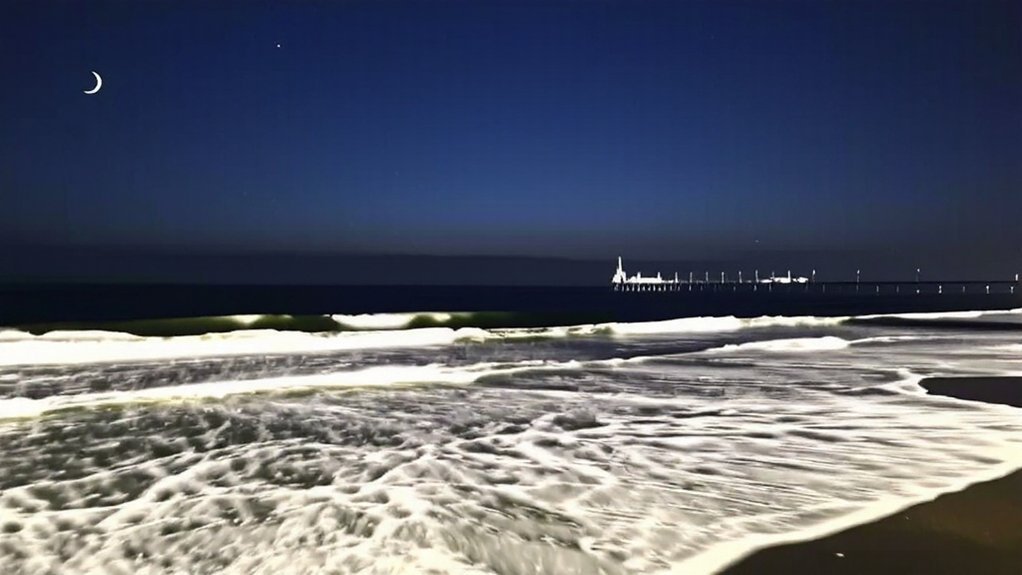
While the morning still feels sleepy, first light shows up before the sun does, with civil twilight easing in around 6:29 AM so you can walk the dog without a flashlight, and it fades out around 5:19 PM after the sun’s gone, which today rises at 7:10 AM and sets at 4:50 PM for about 9 hours 40 minutes of honest daylight.
Near 11:54 AM, solar noon puts the sun about 32.7° high, so shadows stay bossy. The moon, 49.6% lit, rises around 11:35 AM and may seem to nod a bit—lunar libration. After dusk, faint airglow phenomena sometimes tint the sky.
- Catch moonrise near lunch; spot the curve.
- First Quarter hits Dec 27 at 11:09 AM.
- Last new moon was Dec 19; stargaze.
World Clock: California Vs Major Cities
On Saturday morning at 9:55 AM in California, you’re sipping coffee in PST while the day’s already moved on elsewhere—New York’s three hours ahead at 12:55 PM, London’s eight hours ahead at 5:55 PM, and Paris tacks on one more at 6:55 PM, so don’t expect a quick reply from friends over there unless they’re night owls with good tea.
Across the Pacific, Beijing’s 1:55 AM tomorrow and Tokyo’s 2:55 AM, so your pings hit pillows.
Plan calls late afternoon to catch Europe at night and New York before dinner, or early morning to meet Asia at lunch.
That simple map keeps cultural synchrony and media coordination tight—post launches, livestreams, and handoffs land clean instead of crossing wires.
Your day runs without guesswork, friend.
Tools and Time Converters
How do you keep California time straight when everyone you work with lives a few time zones away? You use the Time Zone Converter, set America/Los_Angeles, and see your meeting jump from PST (UTC−8) to every teammate’s clock in an instant. The World Meeting Planner shows overlap windows for sane business hours, which cuts the guesswork. After you decide, the Event Time Announcer spits out a link that tells each person their local start, no “Is that my Tuesday?” mix‑ups. These tools auto‑note the next DST flip to PDT (UTC−7) on Sunday March 8, 2026 at 02:00, so future dates hold. Clean interface design and steady data security keep them simple, honest, and usable.
- Sunrise/sunset details.
- UTC and GMT offsets.
- Atomic clock accuracy verified.
Travel, Airports, and Local Info
Now that your meetings line up clean across clocks, you can plan the trip without second‑guessing the hour, and that starts with picking the right runway.
Heading to SoCal, LAX is the hub, but BUR (12 miles NNW of LAX) and LGB (17 miles SSE) mean shorter lines and quicker bags.
SoCal tip: LAX is king, but BUR and LGB mean shorter lines, faster bags.
Up north, SFO sits 82 miles southwest of Sacramento and covers most long flights; SMF, about 9 miles NNW of downtown, is close and calm.
Book an airport pick‑up, pop in an eSIM before you deplane, and compare accommodation deals while you taxi, so you’re not wrestling apps curbside.
Check local weather—Los Angeles can turn overcast and cool—pack a light layer, and plan airport lounges plus local cuisine for layovers that feel easy.
Calendar, Holidays, and Observances
Usually, you do better when you can see the year laid out clean, so start by grabbing a California-ready calendar from timeanddate—you can download a United States/California set or a tidy PDF template and drop in your plans before the ink dries. Mark the State Holidays first: New Year’s Day sits on Jan 1, and Martin Luther King Jr. Day is Monday, Jan 19, so plan the long weekend early. For Observance Origins, jot Saturday, Dec 27, 2025, when California observes the International Day of Epidemic Preparedness. Timeanddate also flags DST; next change is Mar 8, 2026—clocks jump forward one hour, so budget a little sleep tax.
- Mark school breaks and bills early.
- Color‑code work, family, and play.
- Set week‑ahead reminders; quiet prep wins.
Conclusion
You’ve got the time in your pocket now: 9:55 AM Saturday, December 27, 2025, California, straight-up PST. Sunrise crawled in about 7:10, sunset bows out near 4:50, so plan the short light, don’t chase it. Clocks spring forward March 8, 2026—mark it, like Doc Brown’s clock tower, or you’ll miss a flight. Check world clocks when calling Boston or Tokyo, and trust your phone’s America/Los_Angeles setting; it’s the quiet sherpa that won’t lose the trail.